Workplace Alcohol Testing: A Complete Guide for Employers
Alcohol impairment at work creates serious risks—from workplace accidents to reduced productivity to legal liability.
For employers in safety-sensitive industries, alcohol testing isn't just good practice—it's often legally required. However, even employers without federal mandates increasingly recognize the value of workplace alcohol testing programs.
This guide covers everything employers need to know: when testing is required, what methods work best, how to develop a compliant policy, and best practices for implementation.
Why Employers Implement Alcohol Testing
Workplace alcohol testing serves several important purposes:
- Safety: Impaired employees operating machinery, driving vehicles, or performing safety-sensitive tasks put themselves and others at risk. Testing helps identify problems before accidents occur.
- Productivity: Alcohol impairment reduces job performance, increases absenteeism, and affects workplace morale. As a result, testing programs often improve overall workforce productivity.
- Liability protection: If an impaired employee causes an accident, employers may face significant legal liability. A documented testing program demonstrates due diligence.
- Regulatory compliance: Many industries face federal or state requirements for alcohol testing. Non-compliance can result in fines, loss of contracts, or loss of operating authority.
- Support for employees: Testing programs can identify employees who need help and connect them with treatment resources before problems escalate.
Who Must Implement Alcohol Testing?
DOT-Regulated Industries (Mandatory)
The Department of Transportation requires alcohol testing for safety-sensitive employees in several industries. These federal requirements apply regardless of company size:
- Commercial motor vehicle operators (trucking, bus companies)
- Aviation employees (pilots, flight attendants, mechanics, air traffic controllers)
- Railroad workers (engineers, conductors, dispatchers)
- Pipeline operators (operations, maintenance, emergency response)
- Maritime workers (crew members on commercial vessels)
DOT testing follows specific protocols outlined in 49 CFR Part 40. Employers must use certified testing facilities, follow chain-of-custody procedures, and report results to the appropriate DOT agency.
Other Industries (Often Required or Recommended)
Beyond DOT requirements, many other employers implement alcohol testing:
- Healthcare facilities — patient safety requires sober staff
- Construction companies — heavy equipment and fall hazards demand alertness
- Manufacturing plants — machinery operation requires full attention
- Security companies — armed personnel must remain sober
- Government contractors — many contracts require drug-free workplace programs
Types of Workplace Alcohol Testing
Pre-Employment Testing
When it happens: After a conditional job offer but before the employee starts work.
Purpose: Screen out candidates with current alcohol problems before they join your workforce. This helps establish expectations from day one.
Note: Some states restrict pre-employment alcohol testing. Check your local laws before implementing.
Random Testing
When it happens: Employees receive notice to test with little or no advance warning, based on random selection.
Purpose: Deter employees from drinking before or during work by creating ongoing accountability. Random testing proves more effective than scheduled testing because employees can't plan around it.
Best practice: Use a truly random selection method and test a percentage of your workforce throughout the year. DOT requires specific random testing rates for regulated industries.
Reasonable Suspicion Testing
When it happens: A supervisor observes signs of impairment—slurred speech, alcohol odor, unsteady movement, erratic behavior.
Purpose: Address immediate safety concerns when an employee appears impaired. This type of testing requires documented observations from a trained supervisor.
Best practice: Train supervisors to recognize signs of impairment and document observations properly. Additionally, always have two supervisors confirm observations when possible.
Post-Accident Testing
When it happens: After a workplace accident that meets certain thresholds (injury, property damage, or safety violation).
Purpose: Determine whether alcohol contributed to the accident. This information helps with workers' compensation claims, liability issues, and preventing future incidents.
Best practice: Define clear criteria for when post-accident testing applies. Test as soon as possible after the accident—delays reduce the usefulness of results.
Return-to-Duty and Follow-Up Testing
When it happens: After an employee who previously tested positive completes treatment and returns to work.
Purpose: Verify ongoing sobriety and support recovery. Follow-up testing typically continues for 12-60 months, depending on the situation.
Alcohol Testing Methods for the Workplace
Breathalyzer Testing
How it works: The employee blows into a device that measures breath alcohol content (BrAC), which correlates to blood alcohol content (BAC).
Detection window: Detects current impairment or very recent drinking (within 12-24 hours).
Pros: Immediate results. Non-invasive. Low cost per test. Easy to administer on-site. DOT-approved for workplace testing.
Cons: Only detects current/recent alcohol. Doesn't show drinking patterns over time.
Best for: Random testing, reasonable suspicion testing, post-accident testing, and pre-shift screening.
Saliva/Oral Fluid Testing
How it works: A swab collects saliva, which a technician tests for alcohol presence.
Detection window: Similar to breathalyzer—detects recent alcohol use within 12-24 hours.
Pros: Easy to collect. Difficult to adulterate. Can test for drugs and alcohol simultaneously.
Cons: Usually requires lab confirmation for accurate results. More expensive than breathalyzer per test.
EtG Urine Testing
How it works: Urine sample tests for EtG (ethyl glucuronide), a metabolite the body produces when processing alcohol.
Detection window: Up to 80 hours (about 3.5 days) after drinking.
Pros: Longer detection window catches drinking that breathalyzers miss. Shows alcohol use over days, not just hours.
Cons: Requires urine collection (more invasive). Can produce false positives from incidental alcohol exposure. Doesn't show current impairment.
Best for: Return-to-duty testing, follow-up monitoring, and situations where you need to detect drinking patterns rather than current impairment.
Comparing Testing Methods
|
Method |
Detection Window |
Result Time |
Best Use |
|
Breathalyzer |
12-24 hours |
Immediate |
Random, suspicion, post-accident |
|
Saliva |
12-24 hours |
Minutes to days |
Combined drug/alcohol screening |
|
EtG Urine |
Up to 80 hours |
Hours to days |
Follow-up, return-to-duty |
Developing a Workplace Alcohol Testing Policy
A clear, well-communicated policy protects both your company and your employees. Your policy should address these key elements:
- Purpose statement. Explain why your company conducts alcohol testing—safety, regulatory compliance, employee wellbeing.
- Who the policy covers. Define which employees face testing requirements. This may include all employees or only those in safety-sensitive positions.
- Types of testing. Specify when testing occurs—pre-employment, random, reasonable suspicion, post-accident, return-to-duty.
- Testing procedures. Describe how testing works, including who administers tests, what methods you use, and how you handle results.
- Prohibited conduct. Clearly state what's prohibited—typically, reporting to work under the influence, consuming alcohol during work hours, or refusing to submit to testing.
- Consequences. Outline what happens when someone tests positive or refuses to test. Be specific about disciplinary actions.
- Support resources. Include information about Employee Assistance Programs (EAP) and treatment options. Consequently, employees understand that help is available.
Best Practices for Implementation
- Communicate clearly. Ensure all employees understand the policy before implementation. Provide written copies and conduct training sessions. As a result, no one can claim ignorance of the rules.
- Apply consistently. Enforce the policy uniformly across all employees at the same level. Inconsistent enforcement creates legal vulnerability and damages morale.
- Train supervisors properly. Managers need training on recognizing impairment signs, documenting observations, and following proper procedures for reasonable suspicion testing.
- Use quality equipment. For breathalyzer testing, invest in professional-grade devices with fuel cell sensors. Cheap devices produce unreliable results that can lead to legal challenges.
- Maintain confidentiality. Keep test results confidential and share them only with those who have a legitimate need to know. Therefore, employees feel their privacy remains protected.
- Document everything. Maintain thorough records of all testing, training, and policy communications. Good documentation protects your company if challenges arise.
The Bottom Line
Workplace alcohol testing protects your employees, your company, and the public. Whether you're implementing testing to meet DOT requirements or to maintain a safe workplace, success depends on clear policies, consistent enforcement, and reliable testing methods.
For most workplace testing situations, breathalyzers provide the best combination of immediacy, accuracy, and cost-effectiveness. They deliver instant results, require minimal training to administer, and meet DOT requirements for regulated industries.
Ultimately, the goal isn't to catch employees—it's to maintain a safe environment and deter problems before they occur. A well-designed testing program accomplishes both.
|
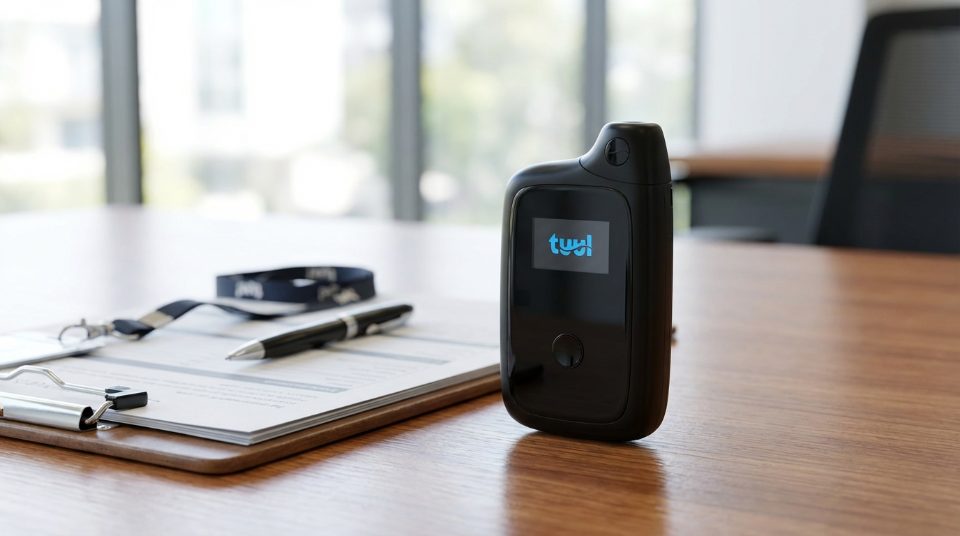
Looking for Workplace Breathalyzer Solutions? The tuul® Breeze is a professional-grade portable breathalyzer with fuel cell accuracy, data logging, and durable construction for workplace use. Contact us for volume pricing and workplace implementation guidance. |
Frequently Asked Questions
Can employers require alcohol testing?
Yes, in most cases. Employers generally have the legal right to test employees for alcohol, particularly in safety-sensitive positions. However, some states have restrictions on when and how testing occurs. Additionally, unionized workplaces may need to negotiate testing policies. Consult with legal counsel to ensure your program complies with applicable laws.
What BAC level constitutes a violation?
For DOT-regulated industries, a BAC of 0.04% or higher constitutes a violation. Many employers set lower thresholds—often 0.02% or even zero tolerance. Your policy should clearly state what level constitutes a violation and what consequences follow.
Can an employee refuse an alcohol test?
Employees can refuse, but refusal typically carries the same consequences as a positive test. For DOT-regulated employees, refusal results in immediate removal from safety-sensitive duties. Your policy should clearly state that refusal equals a positive result.
How often should random testing occur?
DOT sets specific rates for regulated industries—currently 10% of covered employees annually for alcohol. Non-regulated employers can set their own rates. Higher testing rates create stronger deterrence but cost more to administer. Many employers test 25-50% of employees annually.
What kind of breathalyzer should employers use?
For workplace testing, use professional-grade devices with fuel cell sensors—not cheap semiconductor devices. Fuel cell breathalyzers provide the accuracy and reliability needed for employment decisions. DOT-regulated employers must use devices that meet specific DOT approval requirements.