Wine Tasting Transportation: How to Get Home Safely After Visiting Wineries
A day of wine tasting sounds innocent enough—small pours, beautiful scenery, leisurely pace. However, those 1-2 ounce pours add up faster than most people realize. After visiting three or four wineries, many tasters are well over the legal limit without feeling particularly drunk.
Wine country DUIs are common precisely because the experience feels refined and controlled, not like "drinking." The elegant tasting room atmosphere masks the reality: you're consuming significant amounts of alcohol over several hours.
This guide explains how much alcohol you're actually consuming during wine tastings, why it's riskier than it seems, and your best options for getting home safely.
The Math: How Much Are You Actually Drinking?
Wine tasting pours are typically 1-2 ounces each. A standard tasting flight includes 5-6 wines. Let's do the math:
At One Winery
- 5 wines × 1.5 oz average pour = 7.5 oz of wine
- A standard glass of wine is 5 oz
- One tasting = approximately 1.5 glasses of wine
After Three Wineries
- 3 tastings × 7.5 oz = 22.5 oz of wine
- That's 4.5 standard glasses of wine
- For many people, that's enough to reach 0.08% BAC or higher
After Four or Five Wineries
- 5 tastings × 7.5 oz = 37.5 oz of wine
- That's 7.5 standard glasses—nearly a full bottle of wine
- Most people would be significantly over the legal limit
And this assumes you finish each pour. If you're "just tasting" and dumping the rest, consumption is lower. But most people drink everything poured—especially when they've paid for it. Furthermore, many wineries offer generous pours exceeding the standard 1-2 ounces.
Why Wine Tasting Feels Different (But Isn't)
Several factors make wine tasting feel safer than it actually is:
The Sophisticated Setting
Beautiful vineyards, elegant tasting rooms, knowledgeable staff discussing terroir and tannins—this doesn't feel like "drinking." It feels like a cultural experience. However, your liver doesn't care about the setting. Alcohol from a $200 bottle of Cabernet is processed exactly the same as alcohol from a $10 bottle.
The Slow Pace
Wine tastings are leisurely. You spend 30-60 minutes at each winery, driving between locations, perhaps stopping for lunch. This slow pace makes it feel like you're pacing yourself. In reality, you may be consuming alcohol faster than your body can process it—approximately one standard drink per hour. A full tasting at each of three wineries in four hours means you're accumulating alcohol, not metabolizing it.
Small Pours Look Harmless
A 1.5 oz pour looks tiny compared to a regular glass of wine. But five or six tiny pours equal more than a full glass. And you're doing this at multiple stops. The psychology of small portions tricks your brain into underestimating total consumption.
Food May Be Limited
Some wineries offer cheese and crackers; many offer nothing. If you're tasting on an empty or light stomach, alcohol absorbs faster and hits harder. That lunch stop between wineries helps, but it doesn't negate the alcohol already consumed or yet to come.
Transportation Options for Wine Country
Wine Tour Companies
Professional wine tours handle all transportation, often in comfortable vehicles with small groups. The driver takes you from winery to winery, waits while you taste, and delivers you safely home or to your hotel.
- Pros: No driving responsibility, often includes insider access, some include lunch
- Cons: Less flexibility on schedule and winery choices, can be expensive ($100-300+ per person)
- Best for: Groups who want a structured experience, visitors unfamiliar with the area
Private Car Services
Hire a driver or car service for the day. You choose the wineries and schedule; they handle the driving. This offers tour-like convenience with complete flexibility.
- Pros: Complete control over itinerary, private experience, can accommodate your pace
- Cons: Most expensive option ($300-600+ for a full day)
- Best for: Special occasions, couples or small groups wanting a luxury experience
Designated Driver in Your Group
One person stays completely sober and drives. This requires genuine commitment—not "I'll just taste a little." The designated driver should either skip tastings entirely or use the spit bucket religiously.
- Pros: Most affordable option, complete flexibility
- Cons: One person misses the tasting experience, requires strong discipline
- Best for: Groups with a willing non-drinker, visitors who rotate DD duty on trips
Rideshare Between Wineries
In major wine regions, rideshare services are available. You can rideshare to your first winery, between wineries, and back to your hotel or starting point.
- Pros: Flexible, pay-as-you-go, no commitment to a full-day service
- Cons: Availability varies in rural wine country, can add up to significant cost, may involve waits
- Best for: Spontaneous trips, visiting wineries clustered close together
Stay Nearby
Book a hotel or Airbnb in wine country. Taste during the day, walk or take a short rideshare back to your accommodation, and drive home sober the next morning.
- Pros: Turns the trip into a getaway, no pressure to drive after tasting, can enjoy wine with dinner too
- Cons: Adds accommodation cost, requires more time commitment
- Best for: Couples, longer trips, wine country visitors who want the full experience
Strategies for Safer Wine Tasting
If you are driving yourself (though we recommend alternatives), these strategies can help reduce impairment:
Use the Spit Bucket
Professional wine tasters spit because they need to evaluate dozens of wines without getting drunk. You can do the same. Swirl, smell, taste, evaluate—then spit. You'll still experience the wine without consuming all the alcohol. Yes, it feels awkward at first. Winery staff respect tasters who spit; it shows sophistication, not waste.
Limit Your Visits
Instead of hitting five wineries, visit two. You'll have more time at each, can fully appreciate what you're tasting, and consume far less alcohol. Quality over quantity makes for a better experience anyway.
Space Out Your Tastings
Give your body time to process alcohol. A long lunch between tastings helps. Visiting one winery in late morning and one in late afternoon—with several hours between—lets your BAC drop before the next round.
Eat Substantially
Have a real breakfast before tasting. Eat lunch—not just cheese and crackers, but actual food. A full stomach slows alcohol absorption significantly. Many wine regions have excellent restaurants; use them.
Hydrate Constantly
Drink water at every opportunity. Most tasting rooms offer water; drink it. Bring a water bottle for the car between stops. Staying hydrated doesn't reduce your BAC, but it reduces dehydration symptoms and helps you feel better overall.
Check Your BAC Before Driving
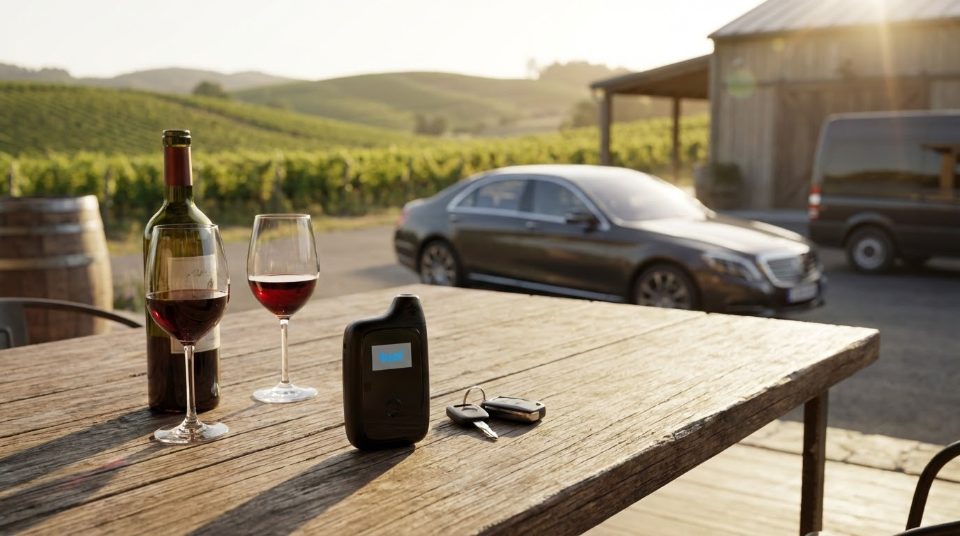
A personal breathalyzer tells you exactly where you stand. Before getting in the car to leave wine country, check your BAC. If you're over 0.08%—or even close—don't drive. Call a rideshare, wait longer, or find a place to stay. The few seconds it takes to test could save your life, your license, and thousands of dollars.
The Bottom Line
Wine tasting is delightful, but it involves consuming more alcohol than most people realize. The sophisticated setting and small pours create an illusion of moderation that doesn't match the reality in your bloodstream.
The safest approach is to arrange transportation that doesn't involve driving yourself: wine tours, private car services, a designated driver, rideshare, or staying overnight. These options let you fully enjoy the experience without risking a DUI.
If you do drive yourself, use strategies to minimize consumption—spit, limit visits, eat well, space out tastings—and always check your BAC before getting behind the wheel. The best wine country memories don't include flashing lights in your rearview mirror.
|
Make Wine Country Memories, Not Mistakes The tuul® Breeze is a professional-grade portable breathalyzer that belongs in every wine country tote bag. Before driving home from your tasting adventure, a quick test tells you whether you're safe to drive or should call for a ride. Don't let a perfect day end with regret. |
Frequently Asked Questions
How many wineries can I visit and still drive safely?
There's no safe universal number because it depends on pour sizes, your body weight, food consumption, time between tastings, and whether you're finishing or spitting. Generally, one winery with a full tasting is pushing limits for driving. Two or more is risky for most people. The only way to know is to measure your BAC.
Is it really that easy to get a DUI in wine country?
Yes. Law enforcement in wine regions knows visitors underestimate their consumption. Police patrol popular wine country roads, especially on weekends. Additionally, even a minor driving error—drifting, rolling a stop sign—can lead to a stop and sobriety testing. The "I was just wine tasting" excuse doesn't help.
Does spitting really work?
Yes. If you spit immediately after swishing the wine in your mouth, you absorb minimal alcohol—a tiny fraction of what you'd absorb by swallowing. Professional tasters evaluate hundreds of wines using this method. It takes practice to feel comfortable, but it's the only way to taste extensively without accumulating alcohol.
How long should I wait after wine tasting before driving?
Your body eliminates alcohol at roughly 0.015% BAC per hour. If you're at 0.10% after tasting, you'd need about 6-7 hours to reach 0.00%—and about 1-2 hours to reach the legal limit. Don't guess; measure. A breathalyzer tells you exactly when you're safe to drive.
Are wine tours worth the cost?
Consider what you're getting: transportation all day, insider knowledge, often food or premium tastings included, and zero risk of a DUI. A tour might cost $150-250 per person. A DUI costs $10,000-25,000. From that perspective, professional transportation isn't expensive—it's a bargain for both safety and experience.