What Happens When You Stop Drinking: A Week-by-Week Timeline
Whether you're taking a break for Dry January, starting recovery, or simply curious about life without alcohol, you're probably wondering what to expect.
The truth is, your body starts changing almost immediately when you stop drinking. Some changes feel great right away. Others take time. And yes, the first few days can be challenging—especially if you've been drinking heavily.
This guide walks through what happens when you quit alcohol, from the first 24 hours through the first year and beyond. Understanding the timeline helps you know what to expect and gives you something to look forward to.
Important: A Note on Alcohol Withdrawal
Before diving into the timeline, an important warning: alcohol withdrawal can be medically dangerous for heavy drinkers.
If you drink heavily every day, quitting suddenly can cause serious withdrawal symptoms including seizures and a condition called delirium tremens (DTs), which can be life-threatening.
Seek medical supervision before stopping if you:
- Drink heavily every day (more than 8-10 drinks daily)
- Have experienced withdrawal symptoms before
- Have a history of seizures
- Have other serious health conditions
For moderate drinkers taking a break, severe withdrawal is unlikely. However, if you're uncertain about your risk level, consult a healthcare provider before stopping.
The First 24 Hours
Your body begins processing and eliminating alcohol almost immediately. Here's what happens during the first day:
- Hours 1-6: Your liver works to metabolize remaining alcohol. Blood sugar levels may fluctuate as your body adjusts. You might feel tired, irritable, or anxious.
- Hours 6-12: For heavy drinkers, mild withdrawal symptoms may begin—anxiety, shakiness, sweating, nausea. Moderate drinkers typically feel relatively normal.
- Hours 12-24: Your body is now alcohol-free (assuming you weren't severely intoxicated). Sleep may be restless as your brain adjusts to the absence of alcohol's sedative effects.
What you might feel: Cravings, difficulty sleeping, restlessness, anxiety, or irritability. These are normal and temporary.
Days 2-3: The Adjustment Period
For many people, days 2-3 represent the most challenging part of the early timeline. Your brain is recalibrating its chemistry after relying on alcohol.
- Sleep disruption: Alcohol suppresses REM sleep, so your brain may "rebound" with vivid dreams or restless nights. This typically improves within a week.
- Mood swings: Anxiety and irritability are common as neurotransmitter levels rebalance. Consequently, you might feel emotionally raw or easily frustrated.
- Physical symptoms: Headaches, fatigue, and mild nausea may occur. Stay hydrated and rest when needed.
- Cravings: The urge to drink often peaks during this period. Remember that cravings pass—usually within 15-30 minutes.
The good news: You've cleared the hardest part. From here, things generally improve.
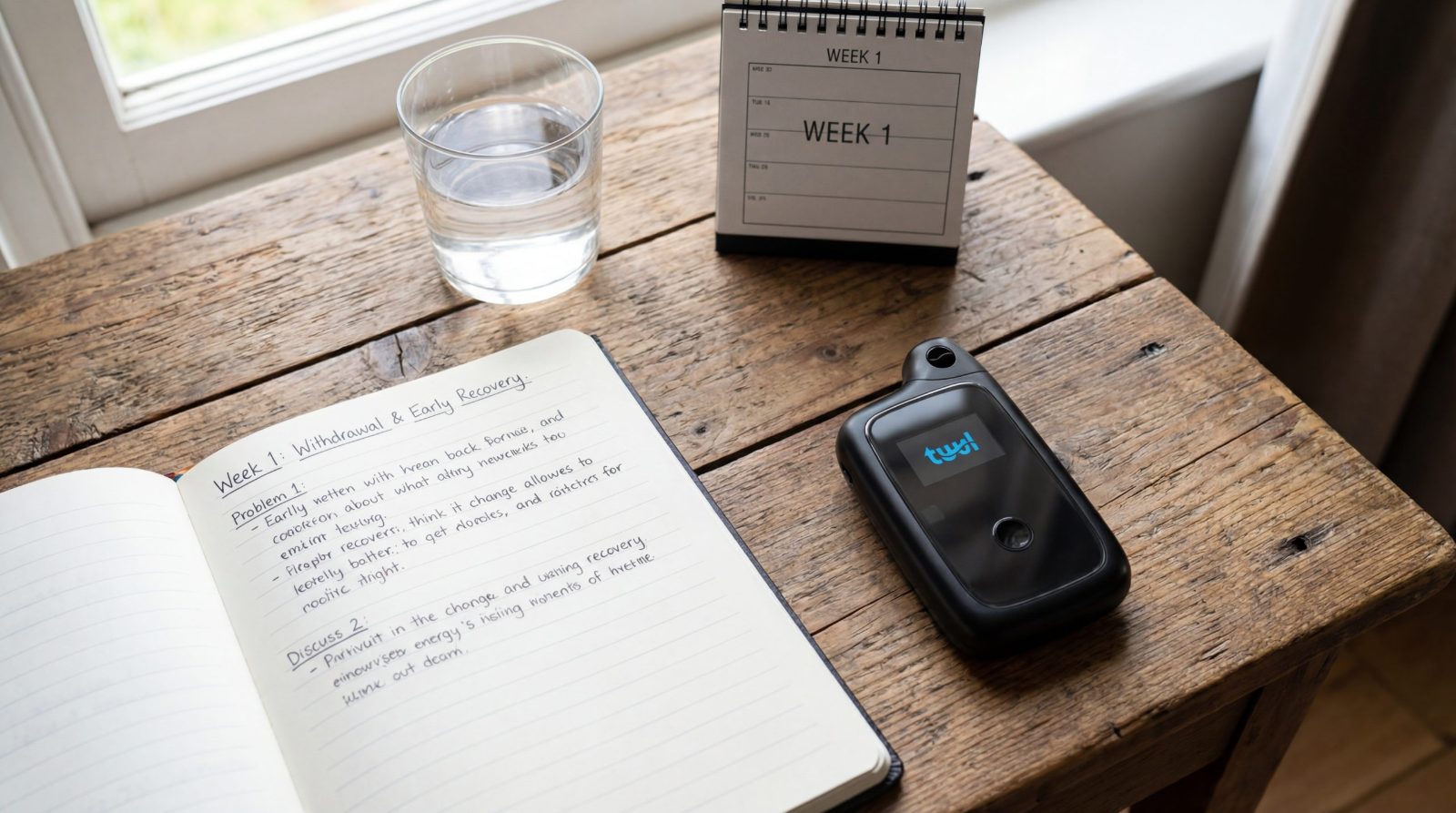
Week 1: Early Improvements
By the end of the first week, your body has made significant progress:
- Better hydration: Alcohol is a diuretic, so stopping allows your body to retain fluids properly. Your skin may look clearer and more hydrated.
- Improved sleep quality: While you may still have some sleep disruption, many people notice they're sleeping more deeply and waking more refreshed.
- Stable blood sugar: Without alcohol's impact on blood sugar, energy levels become more consistent throughout the day.
- Digestive improvement: Stomach irritation from alcohol begins to heal. Acid reflux and digestive discomfort often improve significantly.
- Mental clarity: The "brain fog" associated with regular drinking starts lifting. Focus and concentration improve.
Week 2: Building Momentum
The second week brings more noticeable improvements:
- Weight changes: Many people notice the scale dropping. Alcohol contains significant empty calories, and drinking often leads to poor food choices. Without both factors, weight loss often follows naturally.
- Better mood: Anxiety levels typically decrease as brain chemistry stabilizes. Many people report feeling calmer and more emotionally balanced.
- Increased energy: With better sleep and stable blood sugar, energy levels rise. You may feel more motivated to exercise or tackle projects.
- Liver recovery: Your liver is remarkably good at healing itself. After two weeks without alcohol, liver fat begins decreasing and inflammation reduces.
Weeks 3-4: Feeling the Difference
By the end of the first month, the changes become substantial:
- Blood pressure improvement: Alcohol raises blood pressure. After 3-4 weeks without drinking, many people see measurable reductions.
- Skin transformation: Redness, puffiness, and dullness associated with drinking diminish. Your skin looks healthier and more vibrant.
- Deeper sleep: Sleep architecture normalizes. You spend more time in restorative deep sleep and REM sleep.
- Reduced cravings: The urge to drink diminishes significantly. Many people find they rarely think about alcohol by this point.
- Financial savings: A month without buying drinks adds up quickly. Many people are surprised by how much money they save.
Months 2-3: The New Normal
After the first month, improvements continue more gradually:
- Liver healing: Fatty liver can completely reverse. Liver enzyme levels normalize. If you had elevated liver markers from drinking, they typically return to normal within 2-3 months.
- Brain changes: Studies show that brain volume and function improve over the first few months of sobriety. Memory, attention, and processing speed all benefit.
- Immune function: Alcohol suppresses immune function. After 2-3 months, your immune system operates more effectively.
- Relationship improvements: Without alcohol affecting your behavior and reliability, relationships often improve. Additionally, you have more time and energy for meaningful connections.
Six Months and Beyond
Long-term sobriety brings continued benefits:
- Reduced disease risk: Your risk of alcohol-related cancers, heart disease, and liver disease decreases with each month of sobriety.
- Mental health stability: Depression and anxiety that were worsened by alcohol often improve dramatically over 6-12 months.
- Financial transformation: Six months of savings can amount to thousands of dollars, depending on your previous drinking habits.
- Life changes: Many people find that extended sobriety leads to broader positive changes—new hobbies, better relationships, career advancement, improved self-esteem.
Quick Timeline Summary
|
Timeframe |
Key Changes |
|
24 hours |
Alcohol leaves system, blood sugar stabilizes |
|
48-72 hours |
Withdrawal symptoms peak (if any), worst cravings pass |
|
1 week |
Better sleep, improved hydration, clearer thinking |
|
2 weeks |
Weight loss begins, mood improves, more energy |
|
1 month |
Blood pressure drops, skin improves, cravings fade |
|
3 months |
Liver heals, brain function improves, immune system strengthens |
|
6+ months |
Disease risk decreases, mental health stabilizes, life transforms |
The Bottom Line
When you stop drinking, your body begins healing almost immediately. The first few days can be challenging—especially days 2-3—but improvements come quickly after that.
Within a week, you'll sleep better and think more clearly. Within a month, you'll see changes in your weight, skin, and energy levels. Within three months, your liver can fully heal from fatty liver disease. And beyond six months, your overall disease risk drops significantly.
Whether you're taking a short break or making a longer-term change, knowing what to expect helps you push through the challenging early days and appreciate the benefits as they arrive.
|
Track Your Progress with Verified Sobriety The tuul® Breeze is a professional-grade portable breathalyzer that lets you verify your sobriety and build a documented record of your alcohol-free days. Watch your streak grow and have proof of your progress. |
Frequently Asked Questions
How long does it take to feel better after quitting alcohol?
Most people feel noticeably better within 1-2 weeks. Sleep improves, energy increases, and mental clarity returns. However, the first 2-3 days can be challenging as your body adjusts. The most significant improvements often come after 2-4 weeks.
Will I lose weight if I stop drinking?
Many people do lose weight after stopping drinking. Alcohol contains significant calories (about 150 per beer or glass of wine), and drinking often leads to poor food choices. Without these factors, weight loss often follows naturally within the first few weeks.
How long until my liver heals?
The liver is remarkably good at healing itself. Fatty liver can begin reversing within two weeks, and liver enzyme levels typically normalize within 2-3 months. However, more serious liver damage (cirrhosis) may not fully reverse. Consult a doctor if you have concerns about liver health.
Why can't I sleep after quitting drinking?
Alcohol suppresses REM sleep. When you stop drinking, your brain "rebounds" with increased REM activity, often causing vivid dreams and restless sleep. This typically resolves within 1-2 weeks as your brain adjusts to normal sleep patterns.
Is it dangerous to quit drinking cold turkey?
For heavy daily drinkers, quitting suddenly can cause dangerous withdrawal symptoms including seizures. If you drink heavily every day, have experienced withdrawal before, or have other health conditions, seek medical supervision before stopping. For moderate drinkers taking a break, severe withdrawal is unlikely.