Wedding Alcohol Safety: How to Keep Your Guests Safe
Weddings and alcohol go together like cake and champagne toasts. However, as hosts, couples often don't think about what happens after the last dance—when guests who've been drinking for hours need to get home safely.
The reality is that wedding hosts can face legal liability if intoxicated guests cause accidents. Beyond legal concerns, though, you simply don't want your special day remembered for a tragedy. Consequently, a little planning goes a long way toward ensuring everyone celebrates safely.
This guide covers practical strategies for managing alcohol at your wedding while keeping guests safe and protecting yourself from liability.
The Unique Challenge of Wedding Drinking
Weddings create a perfect storm for overconsumption:
- Extended duration: Unlike a dinner party, weddings often last 4-6 hours or more, giving guests plenty of time to accumulate drinks
- Celebratory atmosphere: The joyful mood encourages people to drink more than usual
- Open bar psychology: When drinks are "free," people tend to consume more than they would if paying per drink
- Social pressure: Toasts, drinking games, and group dynamics push consumption higher
- Unfamiliar location: Guests often drive to venues they don't know well, sometimes far from home
As a result, wedding guests frequently end up more intoxicated than they planned. Therefore, smart couples build safety measures into their celebration from the start.
Understanding Your Liability as Hosts
Depending on your state and how alcohol is served, you may face legal responsibility if an intoxicated guest causes harm. There are several scenarios to consider:
Venue-Provided Alcohol
If your venue provides bartenders and alcohol service, they typically carry liquor liability insurance. However, this doesn't completely protect you. The venue's responsibility depends on their contract terms and local dram shop laws. As a result, you should review your venue contract carefully and ask about their liability coverage.
Self-Serve or BYOB Situations
If you're providing alcohol yourself—whether at a backyard wedding, rented hall, or BYOB venue—your exposure increases significantly. In many states, social host liability laws apply, meaning you could be sued if an intoxicated guest injures someone. Consequently, this scenario requires extra precautions.
Special Event Insurance
Many venues require special event insurance, which often includes host liquor liability coverage. Even if not required, purchasing this coverage is wise. Policies typically cost $150-300 and provide protection against alcohol-related incidents. Therefore, consider this a small investment for significant peace of mind.
Transportation: The Most Important Safety Measure
The best way to prevent drunk driving at your wedding is to make it unnecessary. Here are proven approaches:
Shuttle Service
Hiring a shuttle bus to transport guests between hotels and venue eliminates driving entirely. This option works especially well for destination weddings or venues far from where guests are staying. Although costs vary by location, expect $500-1,500 for multiple round trips. Many couples consider this money well spent.
Rideshare Coordination
If shuttles aren't practical, consider setting up a rideshare station. You can designate a helper to assist guests with ordering rides, pre-arrange accounts for guests to charge rides to, or simply ensure everyone knows that rideshare is expected and encouraged. Some couples even include rideshare gift cards in welcome bags.
Hotel Room Blocks
Booking a room block at a nearby hotel serves dual purposes: it keeps guests close to the venue and provides a safe place to sleep it off. When guests can walk or take a short shuttle to their room, the temptation to drive disappears. Additionally, group rates often make this affordable for guests.
On-Site Accommodations
Venues with on-site lodging—estates, resorts, campgrounds with cabins—eliminate transportation concerns entirely. While often pricier, these venues turn your wedding into a full experience while removing any need for guests to drive. For many couples, this peace of mind justifies the extra cost.
Smart Bar Management Strategies
Timing the Bar
Consider when and how long alcohol is available:
- Delayed opening: Start with a cocktail hour rather than drinks during the ceremony
- Early closing: Close the bar 30-60 minutes before the event ends to allow BAC to drop
- Last call announcement: Give guests notice so they're not rushing to get "one more"
Drink Limits and Alternatives
You don't have to offer unlimited alcohol all night. Some couples choose to limit the bar to beer and wine only, serve signature cocktails rather than a full bar, switch to coffee and dessert drinks after dinner, or provide drink tickets to pace consumption. These approaches reduce overconsumption without feeling restrictive.
Excellent Non-Alcoholic Options
Make not drinking appealing by offering interesting alternatives:
- Craft mocktails that are just as festive as cocktails
- High-quality sparkling water and sodas
- Fresh juice combinations and lemonade
- Coffee and tea stations for late in the evening
When non-drinkers, designated drivers, and those pacing themselves have great options, everyone can participate in toasts and celebrations. Furthermore, these alternatives help guests hydrate between alcoholic drinks.
Food Throughout the Event
Food slows alcohol absorption significantly. Therefore, keep food available throughout the reception—not just during dinner. Passed appetizers, late-night snacks, or a dessert station all help guests pace their drinking. Many couples add late-night food like pizza, tacos, or sliders specifically to help absorb alcohol before guests leave.
Monitoring Guests and Intervening When Needed
Brief Your Bartenders
Professional bartenders are trained to recognize intoxication and cut off service. Before your event, discuss your expectations with the bar staff. Make clear that you support them refusing service to visibly intoxicated guests. As a result, they'll feel empowered to make those calls.
Designate a Safety Point Person
The bride and groom shouldn't be monitoring drunk guests on their wedding day. Instead, designate a trusted friend, family member, or wedding coordinator to keep an eye on consumption and handle any situations. This person should have authority to arrange transportation, cut someone off, or intervene as needed.
Have a Plan for Overconsumption
Know in advance what you'll do if someone drinks too much:
- Where can they rest or sober up?
- Who will arrange their transportation?
- Is there a room at the hotel block they can use?
- Who has authority to take someone's keys if necessary?
End of Night: Getting Everyone Home Safely
The most dangerous time is when the party ends. Here's how to manage the departure:
Stagger Departures
Don't send everyone to the parking lot at once. A grand exit is fun, but then what? Consider announcing shuttle departure times throughout the last hour, having the DJ remind guests about transportation options, or closing the bar before the official end so guests naturally trickle out. These approaches prevent the dangerous rush of impaired drivers leaving simultaneously.
Provide a Way to Check Sobriety
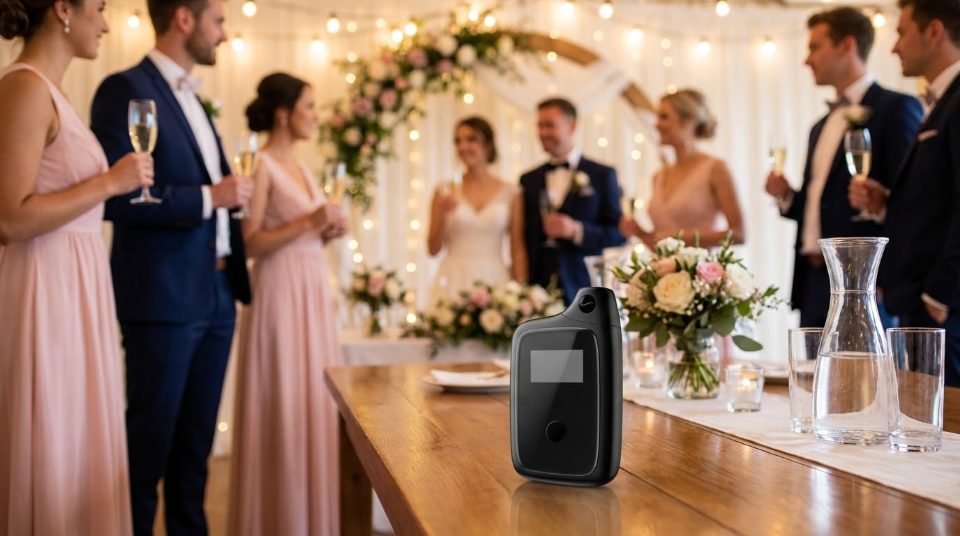
A breathalyzer station near the exit gives guests objective information about whether they're safe to drive. This removes the guesswork and "I feel fine" rationalizations. Many guests appreciate the opportunity to check—it takes the decision out of their impaired judgment.
Place it in a discreet but accessible location with a sign encouraging guests to test before driving. Even if only a few guests use it, those are potentially lives saved. Moreover, its presence reminds everyone that driving safety matters.
Don't Let Anyone Drive Impaired
This sounds obvious, but it requires advance planning. Empower your safety point person to intervene. Have phone numbers for local taxi companies ready. Know that an uncomfortable conversation is infinitely better than a phone call the next morning about an accident. Ultimately, protecting your guests is part of hosting.
The Bottom Line
A wedding with alcohol doesn't have to be a liability nightmare. With thoughtful planning—transportation options, smart bar management, designated monitors, and easy ways for guests to check their sobriety—you can host a celebration where everyone has fun and gets home safely.
The key is thinking about these issues before the wedding, not hoping for the best on the day. Build safety into your plans from the start, and your beautiful day will stay beautiful in everyone's memory. After all, the best weddings are the ones where everyone can celebrate the anniversary.
|
Give Your Guests the Gift of Safe Decisions The tuul® Breeze is a professional-grade portable breathalyzer perfect for wedding exit stations. As a result, guests can check their actual BAC before deciding whether to drive—removing guesswork and keeping everyone safe on your special day. |
Frequently Asked Questions
Can I be sued if a wedding guest drives drunk and causes an accident?
Potentially, yes. Liability depends on your state's social host laws, how alcohol was served, and whether professional bartenders were involved. In many states, hosts who serve visibly intoxicated guests can face civil liability. Consequently, special event insurance with host liquor liability coverage is strongly recommended.
How much does wedding shuttle service typically cost?
Costs vary by location and duration, but expect $500-1,500 for a shuttle bus making multiple trips between a hotel and venue. While this seems expensive, it's far less than a single guest's DUI costs—and infinitely less than the cost of an accident. Many couples consider it essential.
What's the best way to cut off a drunk guest without causing a scene?
Have your designated safety person handle it privately—not the bride, groom, or their parents. Pull the guest aside, express concern for their wellbeing, and offer alternatives: water, food, a place to rest, or arranged transportation. Most people respond better to care than confrontation. Furthermore, having this conversation privately preserves their dignity.
Should we have an open bar or limited options?
This is both a budget and safety decision. Beer and wine only tends to result in less intoxication than full open bars with liquor. However, the most important factors are duration, food availability, and transportation—not whether you serve cocktails. Choose what fits your celebration, and plan safety measures accordingly.
When should we close the bar before the wedding ends?
Closing the bar 30-60 minutes before the event ends allows guests' BAC to begin dropping before they leave. This also encourages a natural wind-down as people finish their last drinks, switch to water or coffee, and prepare to depart. As a result, the end of the night feels less abrupt and more controlled.