
How to Talk to a Loved One About Alcohol Monitoring Without Shame
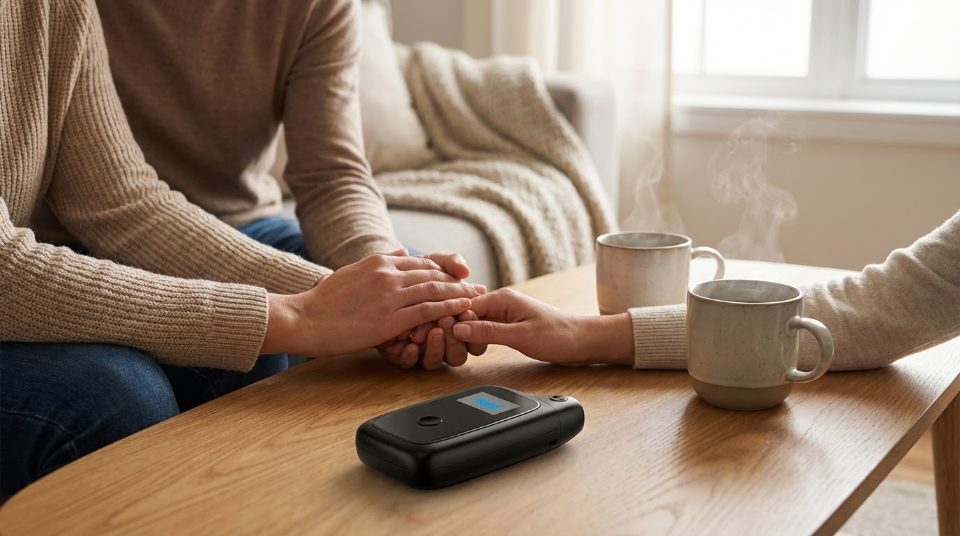
Worry about someone's drinking can feel isolating. Perhaps it's a spouse who's broken promises to cut back, a parent whose behavior changes after a few drinks, or an adult child who's had alcohol-related incidents. You've decided that alcohol monitoring might help—but how do you bring it up without damaging the relationship?
This conversation ranks among the most difficult in family life. Suggesting monitoring may make your loved one feel accused, controlled, or mistrusted. Handle it poorly, and you risk defensiveness that makes the problem worse. However, handle it well, and you create an opportunity for accountability, trust rebuilding, and genuine change.
This guide helps you approach the conversation with compassion while still advocating for what you need. The goal isn't to "win" an argument—it's to open dialogue that protects both your relationship and your wellbeing.
Before You Have the Conversation
Clarify Your Own Motivations
Why do you want monitoring? Be honest with yourself about your true reasons. Is it to help them recover? To protect yourself or children? To verify promises already made? To rebuild trust after betrayal? Understanding your motivation helps you communicate authentically. If your primary goal is punishment or control, monitoring probably isn't the right tool—and your loved one will sense that intent.
Examine Your Expectations
What outcome would satisfy you? Perfect sobriety verified daily? Reduced drinking to safer levels? Accountability during specific high-risk situations? Different expectations require different monitoring approaches. Additionally, consider whether your expectations are realistic. Monitoring supports recovery—it doesn't create motivation that doesn't exist.
Choose the Right Moment
Timing matters enormously. Never have this conversation when either of you has been drinking, when emotions are running high from a recent incident, or when you're rushed. Instead, choose a calm, private moment when you both have time to talk without interruption. Morning conversations work well when minds are clearest; others prefer evening when the day's stress has passed.
Prepare for Defensiveness
Even the gentlest approach may trigger defensiveness. Your loved one might deny there's a problem, accuse you of overreacting, bring up your own faults, or refuse to discuss it entirely. Prepare yourself emotionally for these responses—they're not personal attacks but protective reactions to uncomfortable truth. Your job is to stay calm and compassionate regardless of their initial response.
How to Frame the Conversation
Lead With Love and Concern
Start by expressing care, not criticism. "I love you and I'm worried" lands differently than "You have a drinking problem." Make clear that you're approaching this conversation because the relationship matters, not because you want to control or judge them. Your tone in the first minute often determines whether the conversation becomes productive or combative.
Use 'I' Statements
Focus on your own feelings and experiences rather than accusations. "I feel scared when you drive after drinking" works better than "You're irresponsible when you drink." Describe specific behaviors and their impact: "When you came home drunk last Tuesday, I felt worried and couldn't sleep." This approach shares your reality without attacking their character.
Acknowledge Their Perspective
Validate that being asked to monitor their drinking feels uncomfortable. Saying "I understand this might feel like I don't trust you" or "I know this isn't an easy thing to hear" shows empathy. You can acknowledge their feelings while still expressing your needs. This isn't about agreeing that monitoring is unnecessary—it's about recognizing that the request is hard to receive.
Present Monitoring as a Tool, Not Punishment
Frame monitoring as something that helps rather than something imposed. Try "This could help us both feel more secure" rather than "I need proof you're not lying." Position it as a path to rebuilding trust, not a penalty for past behavior. Many people in recovery find that monitoring actually reduces pressure—they no longer have to convince anyone they're sober because the data speaks for itself.
Be Specific About What You're Asking
Vague requests create anxiety. Instead of "I need you to prove you're not drinking," specify what you're actually proposing: "Would you be willing to use a breathalyzer before you drive?" or "Could we agree to daily check-ins for the next three months?" Concrete proposals are easier to consider than open-ended demands for accountability.
What to Avoid
Ultimatums (Usually)
"Do this or else" rarely produces genuine cooperation. Ultimatums might achieve compliance, but compliance isn't the same as commitment. Be prepared to follow through if you deliver an ultimatum—empty threats damage credibility. Reserve ultimatums for situations where safety genuinely requires it, not as a negotiating tactic.
Comparisons to Others
Statements like "Your brother doesn't drink like this" or "Normal people don't need monitoring" invite defensiveness and sidetrack the conversation. Your loved one's situation is unique, and comparing them to others—favorably or unfavorably—doesn't address what you actually need from them.
Cataloging Every Past Incident
Listing every time they've disappointed you creates overwhelm rather than motivation. One or two recent, specific examples illustrate your concern effectively. A comprehensive catalog of failures feels like prosecution. Focus on the pattern and the path forward, not relitigating every past mistake.
Making It About Winning
This isn't a debate to win. If your loved one feels defeated or humiliated, any agreement they make will breed resentment. The goal is mutual understanding and a path forward that works for both of you. Sometimes that means accepting a smaller step than you initially wanted.
If They Resist
Give Them Time to Process
An immediate "no" isn't necessarily final. Your loved one may need time to move past defensiveness and genuinely consider what you're asking. Sometimes the best response to resistance is: "I understand this is a lot to take in. Can we talk about it again in a few days?" Pressure for an immediate answer often produces a reflexive rejection.
Explore the Underlying Objection
Ask questions to understand why they're resisting. Is it embarrassment? Fear of failure? Feeling controlled? Denial about the severity of the problem? Different objections require different responses. Someone worried about embarrassment might accept discrete home testing but not reporting to others. Meanwhile, someone in denial may need more time to recognize the problem before monitoring makes sense.
Offer Collaborative Problem-Solving
Rather than insisting on your specific solution, invite them to help solve the underlying problem. Try asking: "I need to feel safe. You need to feel trusted. How can we get there together?" This positions you as partners working on a shared challenge rather than adversaries. They may propose alternatives you hadn't considered that still address your core concerns.
Know Your Own Boundaries
If monitoring is genuinely necessary for you to remain in the relationship or situation, be clear about that—with yourself first, then with them. This isn't manipulation; it's honest communication about your limits. You cannot force someone to accept monitoring, but you can decide what you're willing to accept. Sometimes stating that boundary clearly, without anger, creates the clarity needed for real decision-making.
If They Agree
Express Gratitude
Agreeing to monitoring takes courage. Acknowledge that by saying something like: "Thank you for being willing to do this. I know it's not easy." Gratitude reinforces their decision and sets a collaborative rather than adversarial tone for what follows. They've chosen to be accountable—that deserves recognition.
Establish Clear Expectations Together
Work out the details collaboratively. How often will testing occur? Who sees the results? What happens if a test is positive? What's the timeline before reevaluating? Writing these down prevents misunderstandings and provides a reference point if disagreements arise later. Mutual ownership of the agreement increases follow-through.
Focus on Progress, Not Perfection
If your loved one is struggling with alcohol, slips may happen. Decide in advance how you'll handle setbacks. A single positive test doesn't necessarily mean failure—what matters is the overall trajectory. Celebrate the wins, address setbacks constructively, and keep the focus on long-term change rather than demanding perfection from day one.
Build in an End Point
Monitoring shouldn't feel permanent. Establish criteria for reducing or ending monitoring: "After six months of clean tests, we can move to weekly instead of daily" or "After a year, we'll reassess whether this is still needed." This gives your loved one something to work toward and prevents monitoring from feeling like a life sentence.
Special Situations
When Children Are Involved
Child safety elevates the stakes considerably. If you're asking a co-parent to monitor before parenting time, frame it around the children's wellbeing rather than your trust issues. Saying "I want the kids to always have a sober parent" is harder to argue with than "I don't trust you." Be prepared to involve courts or custody agreements if voluntary monitoring isn't accepted and safety concerns persist.
When It's a Parent or Elder
Asking a parent to accept monitoring reverses traditional family dynamics, which can feel uncomfortable for everyone. Approach with extra respect for their autonomy and life experience. Focus on safety concerns—especially fall risks, medication interactions, or driving—rather than implying they can't manage their own lives. Involving siblings or other family members can help distribute the emotional weight of the conversation.
When Trust Has Been Severely Damaged
After major betrayals—drunk driving with children, infidelity while drinking, violent incidents—the conversation may be less about persuasion and more about stating requirements. Being direct is appropriate here: "I need this to stay in this relationship. I understand if you can't accept that, but I need you to know where I am." Damaged trust takes time and evidence to rebuild; monitoring provides that evidence.
The Bottom Line
Asking a loved one to accept alcohol monitoring is one of the hardest conversations in family life. It requires courage to initiate, compassion in delivery, and patience with the response.
Lead with love rather than accusation. Use specific examples and "I" statements. Present monitoring as a tool for rebuilding trust, not a punishment for past failures. Prepare for defensiveness, and give your loved one time to process before expecting a final answer.
Remember that you cannot control their choice—only your own response to it. Whether they accept monitoring or not, you deserve to feel safe in your relationships. That's not controlling; it's healthy boundary-setting.
|
A Tool for Rebuilding Trust The tuul® Breeze is a professional-grade portable breathalyzer designed with dignity in mind. Its discreet, modern design removes some of the stigma from monitoring, making it easier for loved ones to accept. Results can be shared or kept private—whatever serves your situation best. When trust needs rebuilding, objective data helps. |
Frequently Asked Questions
Is it controlling to ask someone to use a breathalyzer?
Asking isn't controlling—demanding without their consent would be. You have the right to express your needs and set boundaries in relationships. They have the right to refuse. What you both do with that information is a mutual decision. Healthy relationships involve negotiating needs, and needing accountability after trust violations is legitimate.
What if they agree but then resent me for it?
Some initial resentment is possible, but it often fades as monitoring becomes routine and trust rebuilds. Focus on expressing appreciation for their cooperation, celebrating clean results, and working toward the point where monitoring is no longer needed. If resentment persists or poisons the relationship, couples counseling can help address underlying dynamics.
Should I offer to do something in exchange?
That depends on the situation. If you're asking a spouse who feels monitored unfairly, offering your own form of accountability (financial transparency, location sharing, or even your own breathalyzer use) can feel more balanced. However, don't offer something you'll resent or can't sustain. Any exchange should feel fair to both parties.
How do I bring this up if we've never discussed their drinking before?
Start with the underlying concern before jumping to monitoring. Opening with "I've been worried about how much you've been drinking lately" begins the conversation. Monitor their response before proposing solutions. If they acknowledge the concern, monitoring might emerge naturally as an option. If they're defensive, you may need multiple conversations before reaching the monitoring discussion.
What if they're in denial about having a problem?
Denial makes the conversation harder but not impossible. Focus on specific behaviors and their impact rather than labels like "alcoholic" or "problem drinker." Sometimes people will accept monitoring to "prove" they don't have a problem—and the data then speaks for itself. Consider involving a professional counselor if denial prevents productive conversation.