Host Liability: What Happens If a Guest Drives Drunk From Your Party
You host a dinner party or backyard barbecue. Everyone has a great time. A guest who's had several drinks says goodbye and drives home. On the way, they cause an accident.
Could you be held legally responsible?
The answer depends on where you live, who your guests are, and what you knew. Social host liability laws vary significantly by state, and the consequences of getting it wrong can be severe—including civil lawsuits, criminal charges, and financial ruin.
This guide explains social host liability, where you might be at risk, and practical steps to protect yourself when hosting events where alcohol is served.
What Is Social Host Liability?
Social host liability refers to the legal responsibility a person who serves alcohol at a private event may have if an intoxicated guest causes harm—typically through drunk driving.
This differs from "dram shop" laws, which apply to bars and restaurants that serve alcohol commercially. Social host laws specifically address private individuals serving alcohol at parties, gatherings, or other non-commercial events.
The key question: if you provide alcohol to someone who then injures themselves or others, can you be held legally responsible for those injuries?
Social Host Liability by State
Laws vary dramatically across the United States:
States With Strong Social Host Liability
Some states hold social hosts liable if they serve alcohol to visibly intoxicated guests who then cause harm. These states include California, Colorado, Connecticut, Florida, Iowa, Louisiana, Massachusetts, Michigan, Minnesota, New Jersey, New Mexico, New York, Ohio, Oregon, Pennsylvania, and Wisconsin, among others.
In these states, if you continue serving someone who's obviously drunk and they drive away and hurt someone, you could face a lawsuit.
States With Limited Social Host Liability
Some states only impose liability in specific circumstances—often only when alcohol is served to minors. Texas, for example, generally doesn't hold hosts liable for serving intoxicated adults, but does impose liability for providing alcohol to minors.
States With Minimal Social Host Liability
A few states, like Kansas and Delaware, offer very limited social host liability for adult guests. However, laws change, and exceptions exist. Never assume you're completely protected without checking current law in your state.
Important: This is general information, not legal advice. Laws change frequently, and your specific situation matters. Consult an attorney in your state for definitive guidance.
Special Rules for Minors
Nearly every state imposes strict liability when adults provide alcohol to minors (under 21). This is true even in states with minimal social host liability for adult guests.
If you serve alcohol to someone under 21 and they cause harm—or are harmed themselves—you face significant legal exposure in virtually every jurisdiction. This includes:
- Civil liability: Lawsuits from injured parties or the minor's family
- Criminal charges: Providing alcohol to minors is a crime; additional charges may apply if harm results
- Homeowner's insurance implications: Your policy may not cover damages from illegal activity
This applies even if you didn't directly hand the minor a drink. If you host a party where alcohol is accessible and minors consume it, you may be liable.
Types of Legal Consequences
Civil Lawsuits
If your intoxicated guest injures someone, the victims (or their families) may sue you for damages. These lawsuits can seek compensation for:
- Medical expenses
- Lost wages
- Pain and suffering
- Property damage
- Wrongful death damages
Judgments can reach hundreds of thousands or even millions of dollars—potentially exceeding your homeowner's insurance coverage and putting your personal assets at risk.
Criminal Charges
In some states and circumstances, social hosts can face criminal charges. This is more common when:
- Minors were served alcohol
- A death resulted from drunk driving
- The host's conduct was particularly reckless
Insurance Consequences
Your homeowner's or renter's insurance may cover some liability claims. However, policies often have exclusions for:
- Criminal acts (like serving minors)
- Intentional conduct
- Claims exceeding policy limits
Review your policy and consider umbrella coverage if you frequently host events with alcohol.
How to Protect Yourself When Hosting
Before the Event
- Plan transportation options: Have rideshare apps ready, keep taxi numbers handy, or arrange designated drivers before anyone starts drinking.
- Prepare non-alcoholic options: Make appealing alcohol-free drinks available so guests can pace themselves.
- Plan food: Serve substantial food throughout the event. Food slows alcohol absorption.
- Consider guest accommodations: If possible, offer overnight stays so impaired guests don't need to travel.
During the Event
- Monitor consumption: Pay attention to how much guests are drinking. You don't need to count drinks, but notice who's becoming intoxicated.
- Stop serving visibly intoxicated guests: In most states with social host liability, continuing to serve someone who's obviously drunk increases your exposure.
- Don't push drinks: Avoid refilling glasses automatically or encouraging people to drink more.
- Keep alcohol secured: If minors are present, don't leave alcohol where they can access it.
As Guests Leave
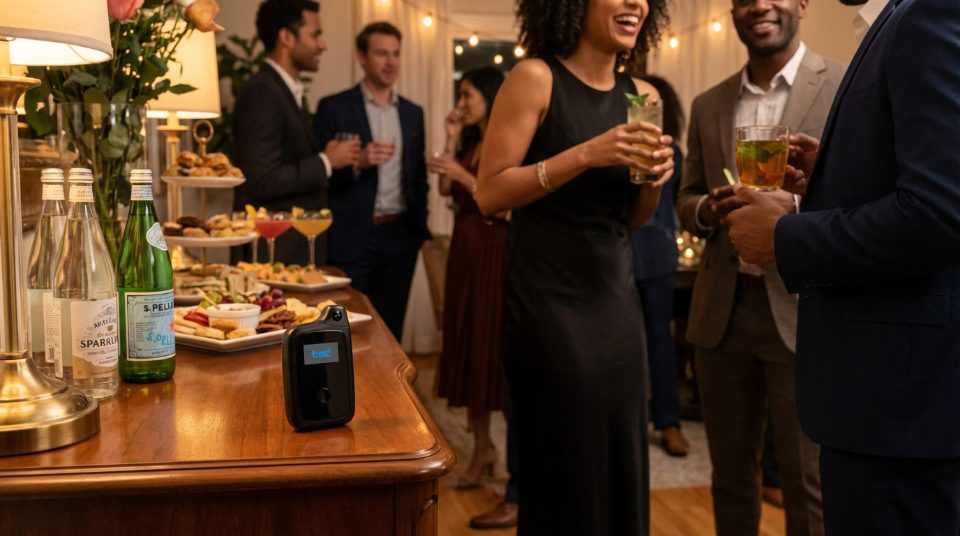
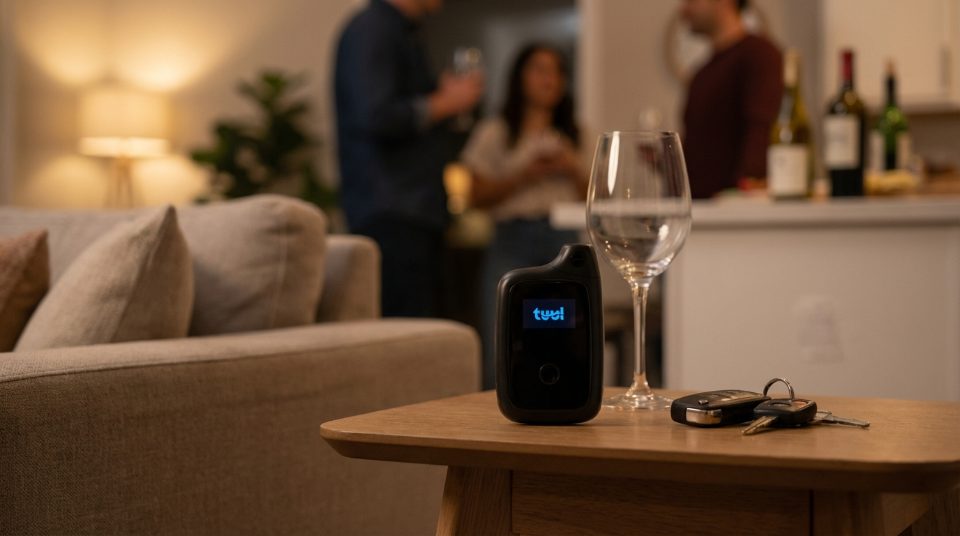
- Assess sobriety: Before guests leave, consider whether they seem impaired. A personal breathalyzer can provide objective data rather than relying on subjective judgment.
- Offer alternatives: If someone seems impaired, offer to call a rideshare, let them stay over, or arrange another ride.
- Don't hand over keys: If you're holding someone's keys and they're impaired, you have more control over the situation.
- Be willing to have awkward conversations: Telling a guest they shouldn't drive is uncomfortable, but far better than the alternative.
Why a Breathalyzer Helps
Judging whether someone is "too drunk to drive" is subjective and unreliable. People with high tolerance may appear sober while legally impaired. Others may seem more affected than their BAC suggests.
A personal breathalyzer provides objective information:
- For you as host: You can check guests' BAC before they leave, giving you real data to support the decision to call a rideshare.
- For your guests: Many guests appreciate being able to check their own BAC. It removes arguments about "I'm fine" vs. "You've had too much."
- For documentation: In the unlikely event of a lawsuit, having offered breathalyzer testing demonstrates you took reasonable precautions as a host.
Making a breathalyzer available at parties turns "you're too drunk" into "let's check the numbers." That shift from subjective judgment to objective measurement makes the conversation easier and the outcome safer.
The Bottom Line
Social host liability is real in many states. If you serve alcohol to guests who then drive drunk and cause harm, you could face civil lawsuits, criminal charges, and financial devastation—especially if minors are involved.
Protecting yourself doesn't mean never hosting parties. It means being thoughtful: planning transportation alternatives, monitoring consumption, stopping service to visibly intoxicated guests, and ensuring no one leaves impaired behind the wheel.
A breathalyzer turns subjective guessing into objective measurement, making it easier to have difficult conversations and ensure everyone gets home safely.
|
Host Responsibly With Real Data The tuul® Breeze is a professional-grade portable breathalyzer that gives you and your guests objective BAC readings. Take the guesswork out of "are you okay to drive?" and ensure everyone leaves your event safely. |
Frequently Asked Questions
Can I really be sued if a guest drives drunk from my party?
In many states, yes. Social host liability laws allow victims (or their families) to sue private hosts who served alcohol to visibly intoxicated guests who then caused harm. The specific rules vary by state, but it's a real legal risk in much of the country.
Does my homeowner's insurance cover this?
Possibly, but with limitations. Many policies provide some liability coverage, but exclusions may apply—especially for criminal acts like serving minors. Policy limits may also be insufficient for serious injury or death claims. Review your policy and consider umbrella coverage.
What if I didn't know my guest was drunk?
Liability typically requires that you served someone who was visibly intoxicated. If a guest showed no signs of impairment, you have a stronger defense. However, continuing to serve someone multiple drinks over hours makes it harder to claim you didn't notice their condition.
Can I physically stop someone from driving?
This is legally complicated. You generally can't physically restrain someone, but you can refuse to return their keys if you're holding them, call police to report a drunk driver, offer alternatives persistently, or enlist other guests to help convince them. The goal is prevention without creating a physical confrontation.
Is it different if I charge for drinks?
Yes—charging for drinks may convert you from a "social host" to a commercial server, subjecting you to dram shop laws instead. This typically increases your liability and may require licenses you don't have. If you're charging for alcohol, consult an attorney about your legal obligations.