Am I Safe to Drive the Morning After Drinking? Here's How to Know
You wake up after a night out. You feel okay—maybe a little tired, maybe a slight headache—but not drunk. You need to get to work, pick up the kids, or run errands. So you grab your keys and head out.
Here's the problem: "feeling okay" doesn't mean you're legal to drive.
Morning-after DUIs are more common than most people realize. Alcohol takes longer to leave your system than you might think, and the consequences of guessing wrong are severe—arrest, license suspension, massive fines, and a criminal record.
This guide explains how long alcohol actually stays in your system, why so many people get caught driving the morning after, and how to know for certain when you're safe to drive.
The Morning-After DUI Problem
Police and prosecutors see it constantly: responsible people who would never drive drunk getting arrested the next morning. They slept for hours. They feel fine. They assume they're sober.
But assumptions don't matter when the breathalyzer reads 0.09%.
Morning-after DUIs happen because people misunderstand how alcohol metabolism works. They assume sleep "sobers you up." They think coffee or a shower clears alcohol from their system. They believe feeling normal means being legally sober.
None of these are true. The only thing that removes alcohol from your body is time—and it takes more time than most people expect.
How Long Does Alcohol Actually Stay in Your System?
Your body processes alcohol at a relatively fixed rate: approximately 0.015% BAC per hour. Nothing speeds this up—not coffee, not food, not sleep, not exercise, not cold showers.
To understand what this means in practice, consider these scenarios:
Scenario 1: Moderate Drinking
You have 4 drinks between 7pm and 11pm, then go to bed at midnight.
- Peak BAC around 11pm: approximately 0.08%
- BAC at midnight (bedtime): approximately 0.07%
- BAC at 6am (6 hours later): approximately 0.00%
In this scenario, you'd likely be safe to drive by early morning. However, individual metabolism varies.
Scenario 2: Heavy Drinking
You have 8 drinks between 7pm and 1am, then go to bed at 2am.
- Peak BAC around 1am: approximately 0.16%
- BAC at 2am (bedtime): approximately 0.14%
- BAC at 8am (6 hours later): approximately 0.05%
- BAC at 11am (9 hours later): approximately 0.00%
In this scenario, you'd still be over the legal limit at 8am—despite sleeping for 6 hours and "feeling okay." You wouldn't be fully sober until late morning.
Scenario 3: Very Heavy Drinking
You have 12 drinks between 6pm and 2am, then go to bed at 3am.
- Peak BAC around 2am: approximately 0.24%
- BAC at 3am (bedtime): approximately 0.22%
- BAC at 9am (6 hours later): approximately 0.13%
- BAC at noon (9 hours later): approximately 0.08%
- BAC at 3pm (12 hours later): approximately 0.04%
In this scenario, you'd still be legally drunk at noon—a full 9 hours after going to sleep. You wouldn't be truly sober until mid-afternoon.
Quick Reference: Hours to Reach 0.00% BAC
|
Peak BAC |
Hours to 0.08% |
Hours to 0.00% |
|
0.08% |
0 hours |
~5.5 hours |
|
0.12% |
~2.5 hours |
~8 hours |
|
0.16% |
~5.5 hours |
~11 hours |
|
0.20% |
~8 hours |
~13.5 hours |
|
0.24% |
~11 hours |
~16 hours |
Note: These are estimates based on average metabolism (0.015% per hour). Individual rates vary. Consequently, some people metabolize alcohol faster or slower than these estimates suggest.
Why You Can't Trust How You Feel
Here's why "feeling fine" is unreliable:
- Tolerance masks impairment. Regular drinkers develop tolerance, meaning they feel less drunk at the same BAC levels. You can feel completely normal while legally impaired.
- Sleep creates false confidence. Waking up from sleep makes you feel refreshed and alert—even if alcohol remains in your system. As a result, morning-after impairment often goes unnoticed.
- Hangovers don't indicate BAC. You can have a terrible hangover and be at 0.00%, or feel fine and still be at 0.06%. Hangover symptoms and BAC don't correlate reliably.
- Impairment begins below the legal limit. Reaction time and judgment suffer at BAC levels well below 0.08%. Even at 0.04%, driving ability is compromised.
The only reliable way to know your BAC is to measure it directly.
How to Know When You're Actually Safe to Drive
Option 1: Wait Long Enough (Conservative Approach)
The safest approach without testing: wait at least one hour for every drink consumed, starting from when you stopped drinking.
Had 6 drinks ending at midnight? Wait until at least 6am. Had 10 drinks ending at 2am? Wait until at least noon.
This approach builds in a safety margin but may be overly conservative for some situations and not conservative enough for others, depending on your body size and metabolism.
Option 2: Use a Personal Breathalyzer (Accurate Approach)
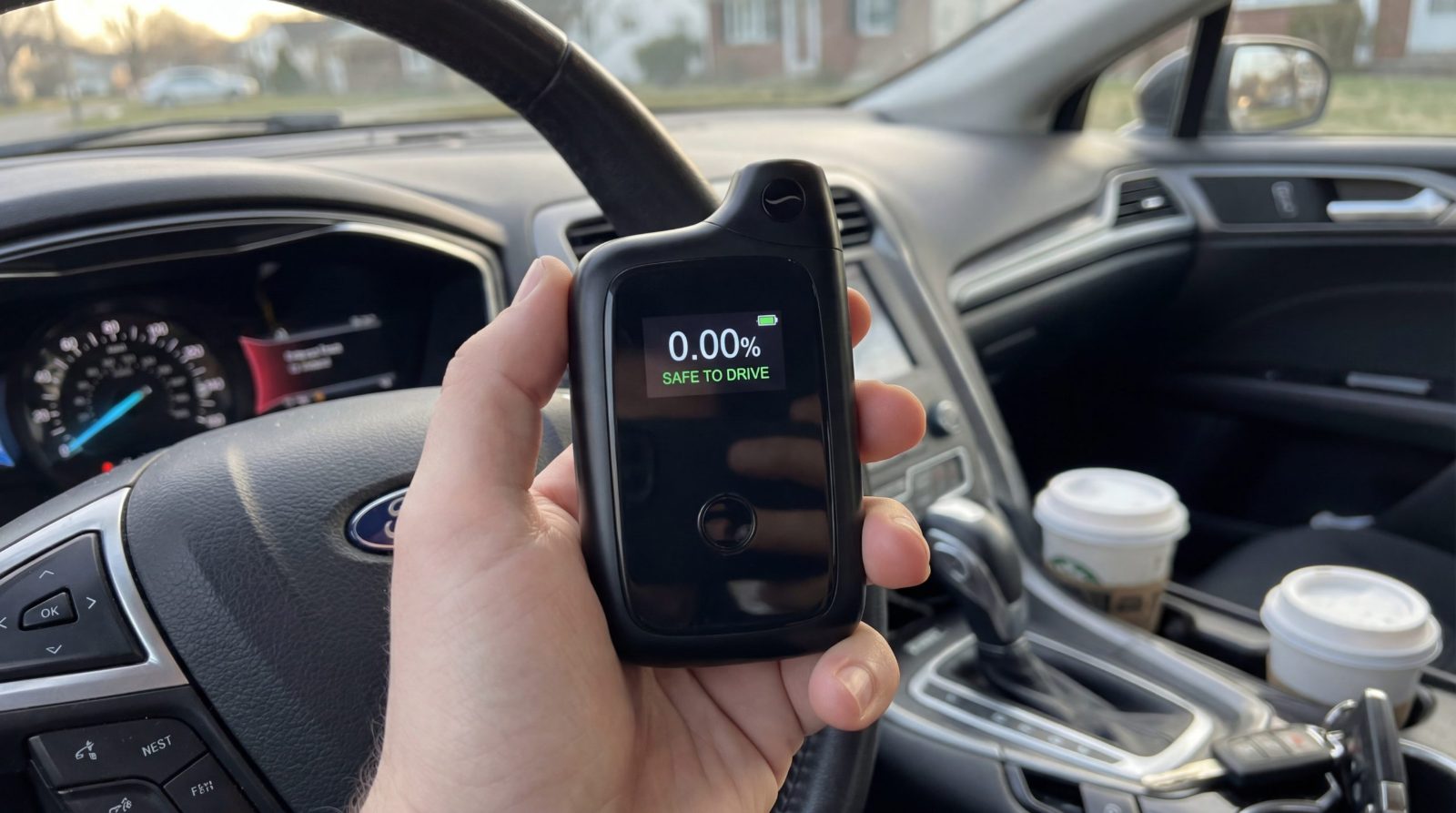
A personal breathalyzer removes the guesswork entirely. Test yourself before getting behind the wheel. If you're at 0.00%, you're safe. If you're still showing alcohol, wait and test again.
This approach works because breathalyzers measure actual BAC, not how you feel. You get objective data instead of subjective guesses.
Important: Use a quality fuel cell breathalyzer, not a cheap semiconductor device. Semiconductor breathalyzers are notoriously inaccurate—especially at lower BAC levels where morning-after decisions happen. An inaccurate reading defeats the purpose.
What to Look for in a Morning-After Breathalyzer
- Fuel cell sensor: This is the same technology police use. Fuel cell sensors provide accurate readings at all BAC levels, including the low levels common in morning-after situations.
- Accuracy at low BAC: Morning-after testing often involves BAC levels between 0.02% and 0.08%. You need a device that's accurate in this range, not just at higher levels.
- Fast warm-up: When you're running late for work, you don't want to wait several minutes for your device to be ready.
- Portability: Keep it in your nightstand, car, or bag so it's always available when you need it.
The Real Cost of Guessing Wrong
A morning-after DUI carries the same penalties as any other DUI:
- Fines: $1,000 to $10,000+ depending on your state
- License suspension: 90 days to 1 year for a first offense
- Insurance increase: $1,000+ per year for 3-5 years
- Legal fees: $2,000 to $10,000+
- Ignition interlock: $100-150/month if required
- Criminal record: Affects employment, housing, and professional licensing
- Total first-offense cost: $10,000 to $25,000+
A quality breathalyzer costs $200-300. The math speaks for itself.
The Bottom Line
Morning-after DUIs happen because people trust how they feel instead of knowing their actual BAC. After a night of heavy drinking, you can wake up, feel alert and normal, and still be legally impaired.
The only reliable way to know you're safe to drive is to measure your BAC directly. A quality personal breathalyzer takes 10 seconds to use and eliminates all guesswork. Test before you drive. If you're at 0.00%, you're safe. If not, wait and test again.
Given the consequences of guessing wrong—thousands in fines, license suspension, criminal record—a breathalyzer is one of the smartest investments any social drinker can make.
|
Know Before You Go The tuul® Breeze is a professional-grade portable breathalyzer with fuel cell accuracy. Test yourself the morning after drinking and know—don't guess—whether you're safe to drive. Takes 10 seconds. Could save you $25,000 and a criminal record. |
Frequently Asked Questions
Can you still be drunk the morning after drinking?
Yes. Alcohol leaves your system at approximately 0.015% BAC per hour. If you had a peak BAC of 0.16% at 1am, you'd still be at 0.08% (the legal limit) at about 6:30am—even after sleeping. Heavy drinking can leave you legally impaired well into the next afternoon.
Does coffee sober you up?
No. Coffee may make you feel more alert, but it doesn't remove alcohol from your system. Only time does that. Drinking coffee just makes you a wide-awake drunk person. Your BAC stays the same regardless of how much coffee you drink.
How accurate are personal breathalyzers?
Quality personal breathalyzers with fuel cell sensors provide accuracy within ±0.005% BAC—essentially the same accuracy as professional devices. However, cheap semiconductor breathalyzers are unreliable and can give false readings. For morning-after decisions, invest in a quality fuel cell device.
What BAC is safe for driving?
The legal limit in all U.S. states is 0.08%, but impairment begins at much lower levels. Reaction time and judgment are affected at 0.02-0.04%. For true safety, wait until you're at 0.00% before driving.
How many hours should I wait after drinking to drive?
A conservative rule: wait one hour per drink consumed, starting from when you stopped drinking. However, this is just an estimate. The only way to know for certain is to test your BAC with a breathalyzer before driving.