Ignition Interlock Alternatives: What Are Your Options?
Ignition interlock devices work, but they come with serious drawbacks.
First, there's the cost—often $100-150 per month plus installation fees. Additionally, the embarrassment factor is significant since everyone who gets in your car immediately knows you have a DUI. On top of that, you'll deal with random retests while driving, monthly maintenance appointments, and the occasional false positive that locks you out of your own vehicle.
If a court requires you to have an interlock device—or you're facing a DUI that might require one—you're probably wondering: are there alternatives?
The answer depends on your situation, your state's laws, and sometimes the specific judge handling your case. This guide covers the alternatives that exist, explains when courts allow them, and shows you how to request them.
What Is an Ignition Interlock Device?
An ignition interlock device (IID) is a breathalyzer that a technician installs in your vehicle. Before your car will start, you must blow a clean sample. If the device detects alcohol above a preset limit (usually 0.02-0.025% BAC), the vehicle won't start.
Furthermore, while you're driving, the device requires random "rolling retests." In other words, you'll receive prompts to blow again to prove you haven't started drinking after starting the car.
Courts commonly require interlock devices after DUI convictions, particularly in these situations:
- Repeat DUI offenses
- First-time offenses with high BAC levels
- DUI cases involving accidents or injuries
- Conditions for obtaining a restricted license during suspension
Common Problems with Ignition Interlock Devices
Cost
Interlock devices typically cost $70-150 per month for the lease. In addition, you'll pay $50-150 for installation and similar fees for removal. Monthly calibration appointments add even more expense. As a result, total costs over a 6-12 month requirement often reach $1,000-2,000 or more.
Embarrassment
Anyone who rides in your car can see the device. Consequently, blowing into it at stoplights or in parking lots draws unwanted attention. For many people, the social stigma feels as burdensome as the practical inconvenience.
False Positives
Interlock devices can trigger from mouthwash, certain foods, hand sanitizer fumes, and other non-alcoholic substances. When this happens, the device locks you out of your car. Moreover, you may need to explain the false reading to your probation officer or the court.
Vehicle Limitations
You can only drive vehicles with an installed interlock. Therefore, if you need to drive a work vehicle, rental car, or someone else's car in an emergency, you're out of luck—or in violation of your requirements.
Maintenance Hassles
The device requires regular calibration appointments, usually monthly. This means taking time off work and visiting a service center. If you miss an appointment, you could face a violation.
What Alternatives to Ignition Interlock Exist?
1. Continuous Alcohol Monitoring (Ankle Bracelets)
How it works: You wear an ankle bracelet 24/7 that measures alcohol through your sweat every 30 minutes. The device automatically transmits results to a monitoring center.
Cost: Expect to pay $300-400+ per month—significantly more than interlock devices.
When courts allow it: Judges may accept ankle monitoring as an alternative to interlock, particularly when the primary concern is alcohol abstinence rather than specifically preventing drunk driving. This option works especially well for people who don't own vehicles.
Pros: You won't need any vehicle modifications. Additionally, the device monitors your sobriety 24/7, not just when you're driving.
Cons: The cost is significantly higher. Also, while you can hide the bracelet under pants, it remains visible in some situations. You must wear it constantly, including during sleep and bathing.
2. Scheduled Remote Breathalyzer Programs
How it works: You use a portable breathalyzer with facial recognition at scheduled or random times throughout the day. A monitoring company receives your results and reports them to the court or probation office.
Cost: Monthly fees typically range from $150-300 for the monitoring service.
When courts allow it: Courts increasingly accept this option as an interlock alternative, especially for first-time offenders or those who demonstrate they don't drive regularly.
Pros: You won't need to modify your vehicle. Furthermore, this option is more discreet than other monitoring methods. It also works well if you don't own a car.
Cons: You must test at set times without exception. Missing a test counts as a violation.
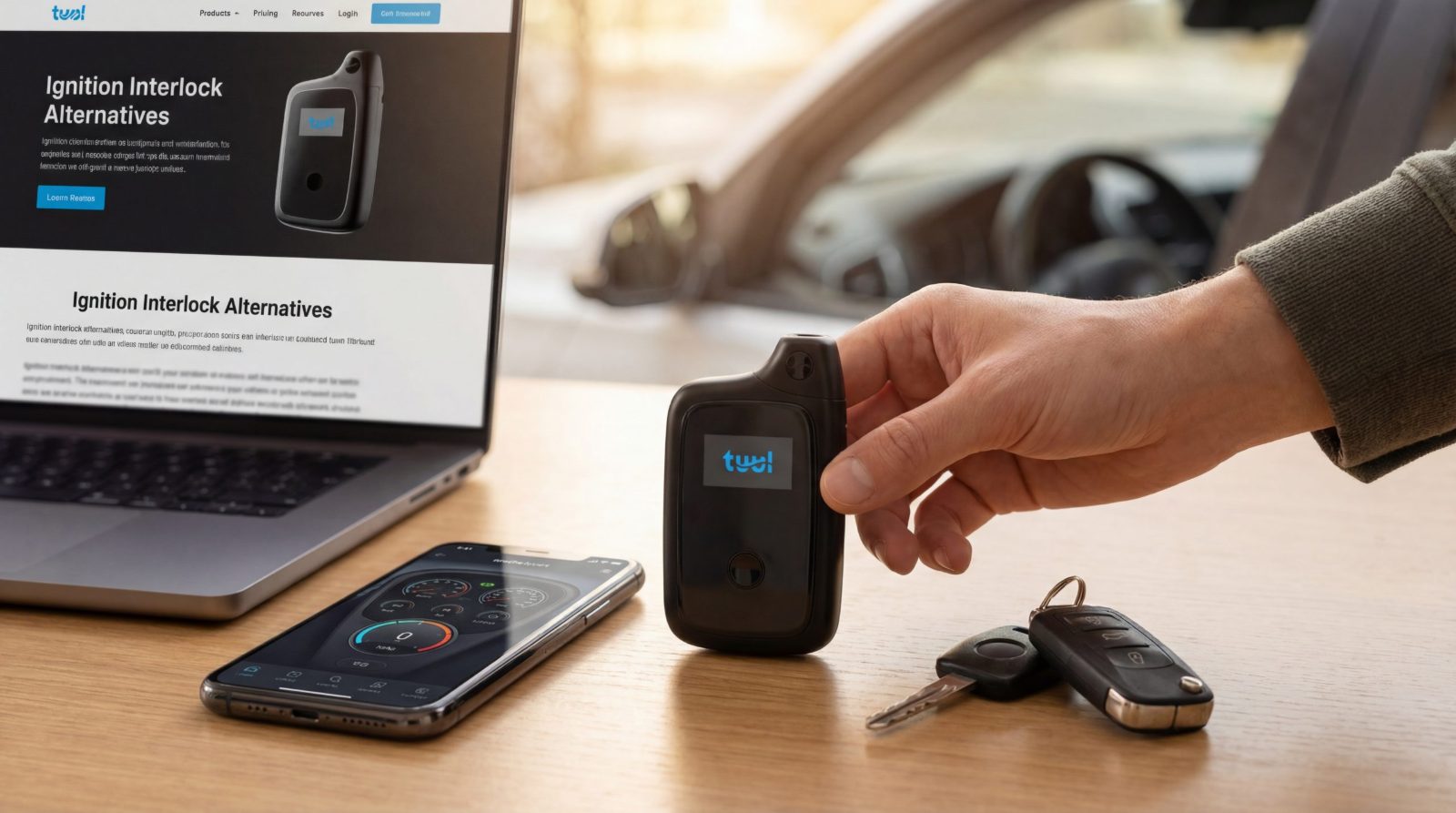
3. Personal Portable Breathalyzer with Verification
How it works: You own a portable breathalyzer with smartphone connectivity that logs results with timestamps and photos. You test yourself at agreed-upon times and share results with your attorney, probation officer, or the court.
Cost: You'll pay a one-time device purchase price of $150-400 with no monthly monitoring fees afterward.
When courts allow it: Courts more commonly accept this option as supplemental monitoring or in diversion programs. Some judges also approve it as primary monitoring for low-risk, first-time offenders. However, you'll always need approval from your attorney and the court first.
Pros: This is the most affordable option over time because you own the device outright. There are no monthly fees, and testing remains completely private and discreet.
Cons: Not all courts accept this as an interlock replacement. You'll need specific court approval before relying on this option.
4. Full License Suspension (No Driving)
How it works: Instead of getting a restricted license with interlock, you accept full license suspension and simply don't drive during the suspension period.
Cost: You'll pay nothing for monitoring. However, you may face significant costs for alternative transportation.
When it's available: This option always remains available since no one requires you to get a restricted license. Courts only require the interlock if you choose to drive during your suspension period.
Pros: You'll avoid all interlock costs and device hassles completely.
Cons: You can't drive legally during the suspension. For many people, this proves impractical for work or family obligations. Some states also extend your total time without a full license if you don't complete interlock requirements.
Comparing Your Options
|
Option |
Monthly Cost |
Can You Drive? |
Court Acceptance |
|
Ignition Interlock |
$70-150 |
Yes (with IID) |
Universal |
|
Ankle Monitor |
$300-400+ |
Varies |
High |
|
Remote Breathalyzer Program |
$150-300 |
Varies |
Growing |
|
Personal Breathalyzer |
$0 (own device) |
Varies |
Limited/Varies |
|
Full Suspension |
$0 |
No |
Always available |
How to Request an Interlock Alternative
- Talk to your attorney first. Your lawyer knows the local court, the judges, and what alternatives judges have accepted in similar cases. As a result, they can tell you whether requesting an alternative is realistic for your situation.
- Understand your state's laws. Some states mandate interlock for certain offenses with no alternatives whatsoever. In contrast, other states give judges discretion. Your attorney can explain what's legally possible in your jurisdiction.
- Build your case. When requesting an alternative, prepare to explain why you need one. For example, valid reasons might include: you don't own a vehicle, you're facing financial hardship, your employment requirements prevent interlock use, or you're willing to accept more intensive personal monitoring instead.
- Propose a specific alternative. Don't simply ask to avoid interlock—instead, propose what you'll do in its place. For instance, offering to wear an ankle monitor or participate in a remote breathalyzer program shows you're serious about compliance, not just trying to avoid accountability.
- Demonstrate good faith. If you're proactively monitoring your sobriety with a personal breathalyzer before anyone requires it, that shows the court you're committed to staying sober. Consequently, this evidence may strengthen your case for alternative monitoring.
When Alternatives Aren't Available
In some situations, interlock may be your only option if you want to drive:
- State law mandates interlock for your offense with no judicial discretion
- Repeat DUI offenses where courts refuse to approve alternatives
- High-BAC or aggravated DUI where the court requires maximum monitoring
- Prior violations of other monitoring requirements
If interlock becomes mandatory, focus on completing the requirement successfully. After all, the sooner you finish without violations, the sooner the requirement ends.
The Bottom Line
Several ignition interlock alternatives exist, including ankle monitoring, remote breathalyzer programs, personal breathalyzer monitoring, and simply accepting full license suspension.
Whether an alternative works for your situation depends on your state's laws, your specific offense, and the judge's discretion. Therefore, talk to your attorney about what's possible and how to make the strongest case.
If you're facing a DUI and want to demonstrate good faith commitment to sobriety—whether to support a request for alternative monitoring or to build a positive record—proactive self-monitoring with a portable breathalyzer can help significantly. Ultimately, it shows the court you're taking your sobriety seriously rather than just complying with minimum requirements.
|
Demonstrate Your Commitment to Sobriety The tuul® Breeze is a professional-grade portable breathalyzer with smartphone connectivity that lets you document your sobriety with verified results. Whether you're building a case for alternative monitoring or demonstrating good faith to the court, tuul® helps you prove your commitment. |
Frequently Asked Questions
Can I avoid ignition interlock for a first DUI?
That depends on your state and the specifics of your case. Many states require interlock even for first offenses, especially when your BAC was high. However, other states give judges discretion. Talk to your attorney about what's possible in your jurisdiction.
Is an ankle monitor better than an interlock?
Not necessarily. Ankle monitors cost significantly more ($300-400/month versus $70-150/month), and you must wear them 24/7. They may work well if you don't drive. However, for most people who need to drive, interlock proves more practical despite its drawbacks.
Can I use my own breathalyzer instead of an interlock?
In some cases, yes—but only with court approval. Courts increasingly accept personal breathalyzers with verification features for low-risk offenders or as supplemental monitoring. Your attorney can advise whether this option is realistic for your situation.
What if I don't own a car?
If you don't own a vehicle, interlock obviously doesn't make sense. As a result, courts typically allow alternative monitoring—like ankle bracelets or remote breathalyzer programs—for people who don't have a vehicle for interlock installation.
How do I request an interlock alternative?
Work with your attorney to file a motion with the court requesting alternative monitoring. You'll need to explain why you're requesting an alternative and propose a specific option that still provides accountability. Having a compliance history or demonstrating proactive sobriety monitoring can significantly strengthen your request.