How Long Does Alcohol Stay in Your System? Complete Guide
Whether you're preparing for a test, monitoring your sobriety, or just curious about how your body processes alcohol, understanding detection windows matters.
The short answer: it depends on what's being tested. Alcohol can be detected in your breath for 12-24 hours, in your urine for up to 80 hours, and in your hair for up to 90 days.
This guide breaks down exactly how long alcohol stays detectable in different parts of your body, what factors affect metabolism, and what this means for various types of testing.
Quick Answer: Detection Windows by Test Type
|
Test Type |
Detection Window |
What It Detects |
|
Breathalyzer |
12-24 hours |
Alcohol in breath |
|
Blood test |
Up to 12 hours |
Alcohol in blood |
|
Standard urine test |
12-24 hours |
Alcohol in urine |
|
EtG urine test |
Up to 80 hours |
Alcohol metabolite |
|
Hair follicle test |
Up to 90 days |
Alcohol metabolites |
How Your Body Processes Alcohol
When you drink, alcohol is absorbed through your stomach and small intestine into your bloodstream. From there, it travels throughout your body—including to your brain (where it causes intoxication) and your lungs (where some evaporates into your breath).
Your liver does most of the work of breaking down alcohol. It metabolizes alcohol at a fairly consistent rate: roughly 0.015% BAC per hour for most people. This means if your BAC is 0.08% (the legal driving limit), it takes about 5-6 hours to return to 0.00%.
Here's the important part: nothing speeds up this process. Coffee, food, water, cold showers—none of these help your body metabolize alcohol faster. Time is the only solution.
Detection Windows Explained
Breathalyzer Testing (12-24 hours)
Breathalyzers measure alcohol that evaporates from your blood into your lungs and exits in your breath. They provide a real-time estimate of your current blood alcohol content.
Detection window: Alcohol is typically detectable on breath for 12-24 hours after drinking, depending on how much you consumed. Light drinking may clear in 12 hours; heavy drinking can take 24 hours or more.
Example: If you have 4-5 drinks and reach a BAC of 0.10%, it takes about 7 hours to metabolize completely. A sensitive breathalyzer might detect trace amounts for a few hours beyond that.
Blood Testing (Up to 12 hours)
Blood tests measure alcohol directly in your bloodstream. They're the most accurate method but are invasive and typically only used in medical or legal settings.
Detection window: Alcohol is detectable in blood for up to 12 hours after drinking, sometimes longer with heavy consumption.
Standard Urine Testing (12-24 hours)
Standard urine tests detect the presence of alcohol itself in your urine. The detection window is similar to breath and blood testing.
Detection window: 12-24 hours after drinking, depending on amount consumed.
EtG Urine Testing (Up to 80 hours)
EtG (ethyl glucuronide) tests detect a metabolite your body produces when processing alcohol—not the alcohol itself. This allows for a much longer detection window.
Detection window: Up to 80 hours (about 3.5 days) after drinking. Heavy drinking may be detectable even longer.
Important note: EtG tests are very sensitive and can sometimes detect alcohol from incidental exposure—hand sanitizer, mouthwash, certain foods. This can cause false positives in some cases.
Hair Follicle Testing (Up to 90 days)
Hair tests detect alcohol metabolites that become embedded in hair as it grows. Since hair grows about half an inch per month, a 1.5-inch sample can show alcohol use over the past 90 days.
Detection window: Up to 90 days, depending on hair length tested.
Limitations: Hair tests show patterns of use over time but can't pinpoint exactly when drinking occurred. They're better at detecting regular drinking than a single episode.
Factors That Affect How Fast You Metabolize Alcohol
While the average person metabolizes alcohol at about 0.015% BAC per hour, several factors can affect your individual rate:
- Body weight and composition: Larger people and those with more muscle mass generally process alcohol faster than smaller people or those with higher body fat percentages.
- Biological sex: Women typically metabolize alcohol more slowly than men due to differences in body composition and enzyme levels.
- Age: Metabolism generally slows with age, meaning older adults may process alcohol more slowly.
- Food intake: Drinking on an empty stomach leads to faster absorption and higher peak BAC. Food slows absorption but doesn't change how fast your liver processes alcohol once it's in your blood.
- Liver health: Liver damage or disease significantly impairs alcohol metabolism.
- Medications: Some medications interfere with alcohol metabolism, either slowing it down or causing adverse reactions.
- Genetics: Genetic variations affect the enzymes responsible for breaking down alcohol, causing significant individual differences.
What This Means If You're Being Tested
For breathalyzer testing
If you're subject to regular breathalyzer testing—for probation, custody, or personal accountability—alcohol from the night before can still show up on a morning test. Heavy drinking the previous evening may be detectable for 12-24 hours. Plan accordingly.
For EtG urine testing
EtG's 80-hour detection window means drinking on Friday night could potentially show up on a Monday test. If you're in a program with random EtG testing, there's no "safe" window for drinking without risk of detection.
For hair testing
Hair tests reveal patterns over months, not days. A single episode of drinking may not show up, but regular drinking will. If you're subject to hair testing, consistent abstinence is the only way to ensure clean results.
Common Myths About Speeding Up Alcohol Metabolism
Myth: Coffee sobers you up.
Reality: Coffee may make you feel more alert, but it doesn't reduce your BAC or help your body process alcohol faster. You'll just be a wide-awake drunk.
Myth: Eating after drinking helps you sober up.
Reality: Eating before drinking slows absorption, but eating after doesn't speed up metabolism. The alcohol already in your blood is processed at the same rate regardless.
Myth: Exercise or sweating removes alcohol.
Reality: Only about 10% of alcohol leaves through sweat, breath, and urine. The other 90% must be processed by your liver, and exercise doesn't speed that up.
Myth: Drinking water flushes alcohol out.
Reality: Staying hydrated is good for you, but water doesn't speed up alcohol metabolism. It may help with hangover symptoms, but it won't help you pass a test sooner.
The Bottom Line
How long alcohol stays in your system depends on how much you drank and what kind of test you're taking:
- Breathalyzer: 12-24 hours
- Blood: Up to 12 hours
- Standard urine: 12-24 hours
- EtG urine: Up to 80 hours
- Hair: Up to 90 days
Your body metabolizes alcohol at roughly 0.015% BAC per hour, and nothing speeds this up. If you need to test clean, time and abstinence are the only reliable solutions.
|
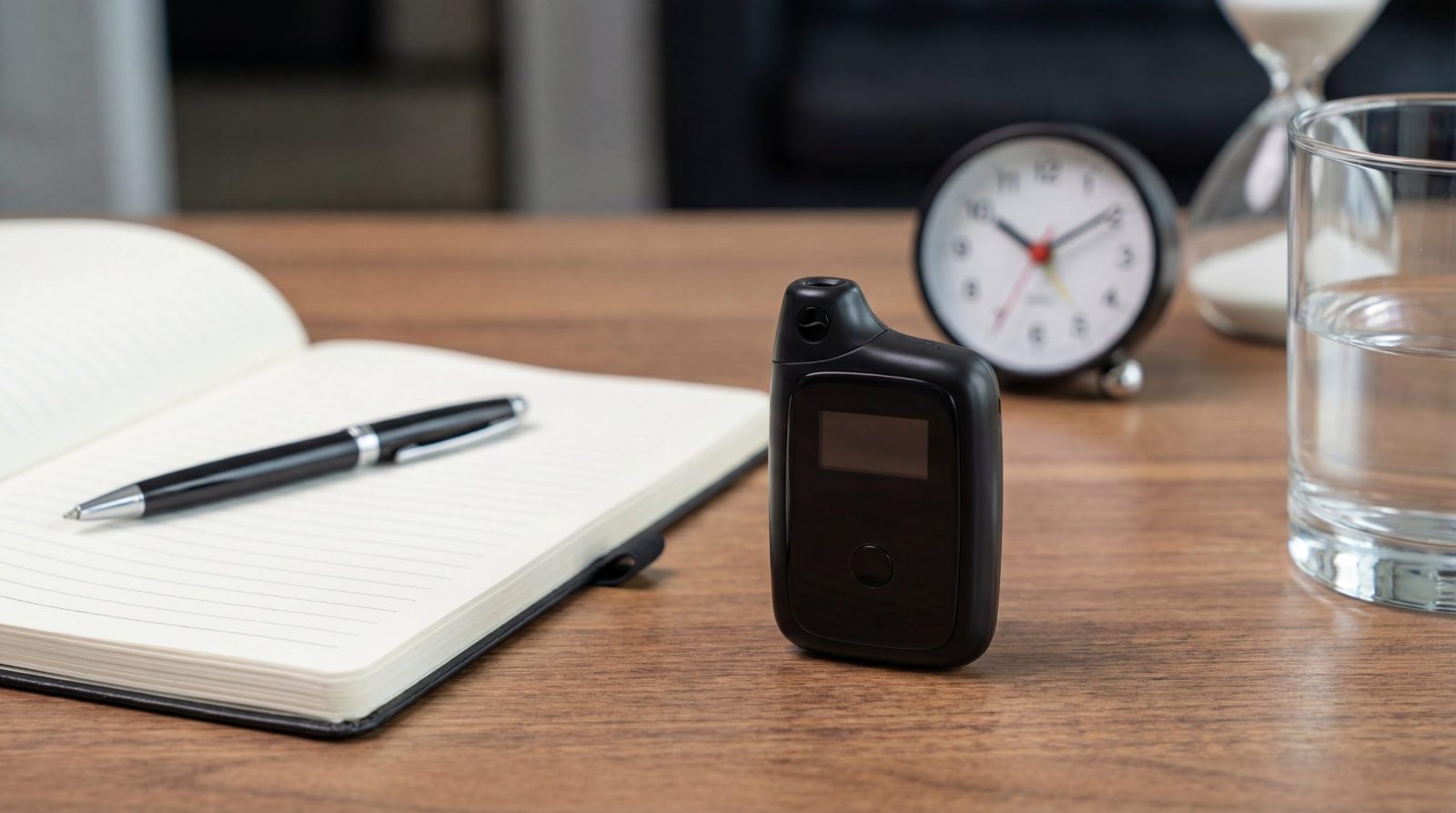
Want to Know Your BAC Right Now? The tuul® Breeze is a professional-grade portable breathalyzer that gives you accurate BAC readings in seconds. Track your levels over time with smartphone connectivity and know exactly where you stand. |
Frequently Asked Questions
How long does one drink stay in your system?
One standard drink (12 oz beer, 5 oz wine, or 1.5 oz liquor) raises your BAC by roughly 0.02-0.03% and takes about 1-2 hours to metabolize completely. However, it may be detectable on an EtG test for up to 24-48 hours after even a single drink.
Can I pass a breathalyzer 12 hours after drinking?
It depends on how much you drank. Light drinking (1-2 drinks) will likely clear in 12 hours. Heavy drinking (5+ drinks) may still be detectable after 12 hours. When in doubt, use a personal breathalyzer to check before any situation where you need to test clean.
How long does alcohol stay in urine for an EtG test?
EtG can be detected in urine for up to 80 hours (about 3.5 days) after drinking. Heavy drinking may be detectable even longer. This is much longer than standard urine tests, which only detect alcohol for 12-24 hours.
Does drinking water help pass an alcohol test?
No. Drinking water doesn't speed up alcohol metabolism. Your liver processes alcohol at a fixed rate regardless of hydration. Water may help dilute urine tests slightly, but most tests account for this by also measuring creatinine levels.
How accurate are personal breathalyzers?
Professional-grade personal breathalyzers with fuel cell sensors are highly accurate—typically within ±0.005% BAC. Cheaper devices with semiconductor sensors are much less reliable. For accurate results, invest in a quality fuel cell breathalyzer.