Why Attorneys Recommend Portable Breathalyzers to Clients
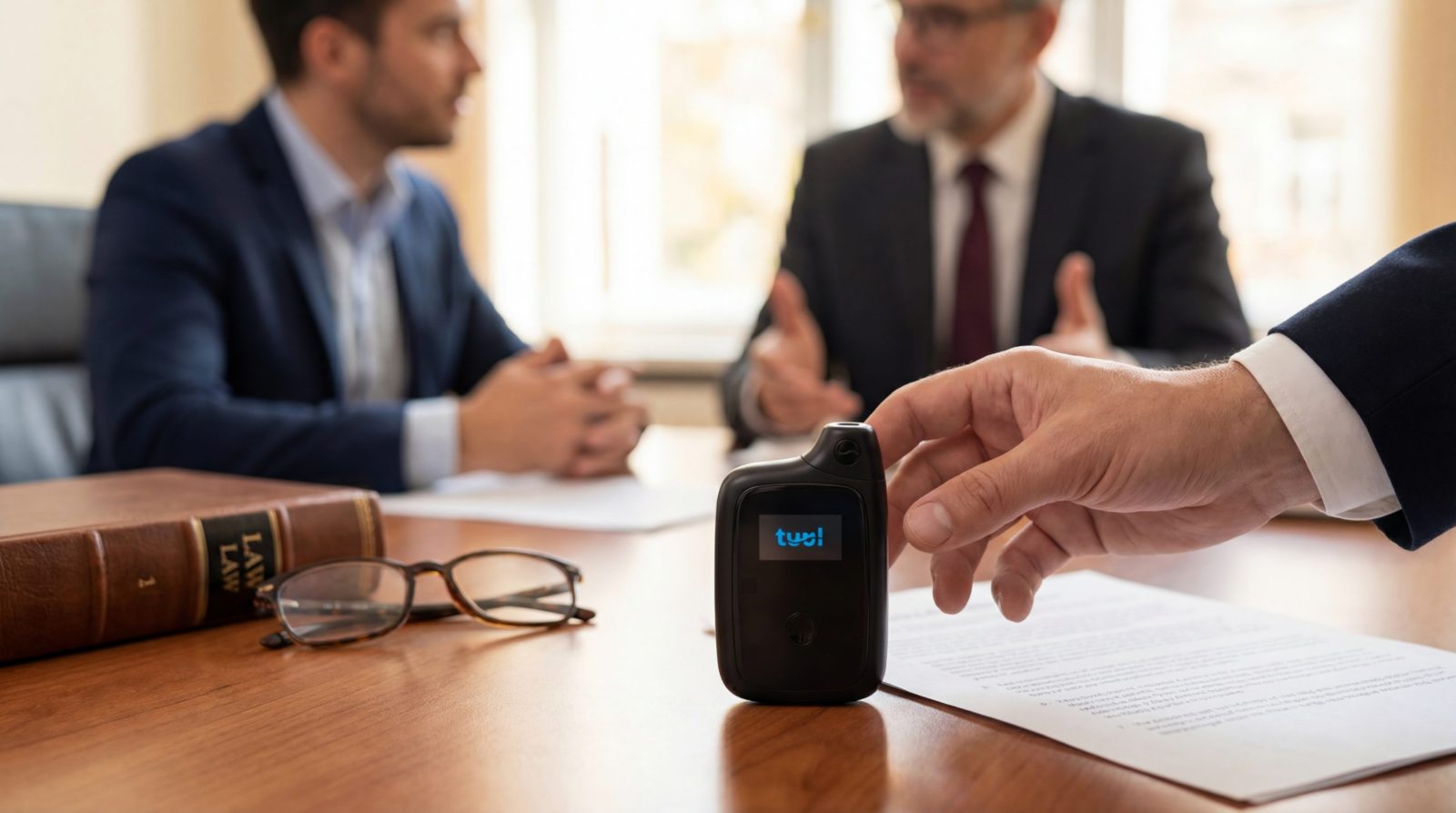
If you're facing a DUI charge, custody dispute, or any legal matter involving alcohol, your attorney may suggest something unexpected: buying a portable breathalyzer and testing yourself daily.
This advice surprises many clients. After all, isn't sobriety monitoring something the court imposes? Why would you volunteer for it?
The answer is strategic. Proactive self-monitoring demonstrates good faith, builds a documented record, and often leads to better outcomes—whether that means reduced charges, favorable custody arrangements, or avoiding expensive court-ordered monitoring altogether.
This guide explains why experienced attorneys recommend portable breathalyzers to clients, how self-monitoring strengthens legal cases, and what to look for in a device.
Why Attorneys Recommend Proactive Self-Monitoring
1. It Demonstrates Good Faith to the Court
Judges see countless defendants who claim they've changed—and then violate probation or fail a court-ordered test. When you voluntarily monitor yourself before the court requires it, you stand out.
Proactive monitoring tells the court: "I'm taking this seriously. I'm not waiting to be told what to do—I'm already doing it." This kind of initiative influences judges, prosecutors, and probation officers. Consequently, clients who demonstrate proactive accountability often receive more favorable treatment.
2. It Creates a Documented Record
Words are easy. Documentation is powerful.
When your attorney can present 60, 90, or 180 days of verified breathalyzer results showing consistent sobriety, that evidence carries weight. It transforms "my client says they're sober" into "here's objective proof of my client's sobriety over the past six months."
Modern portable breathalyzers with smartphone connectivity automatically log results with timestamps and photos. This creates an unbroken chain of documented sobriety that your attorney can present to the court.
3. It May Reduce Court-Ordered Monitoring Requirements
Court-ordered monitoring is expensive. Ankle bracelets cost $300-400+ monthly. Ignition interlock devices run $100-150 monthly. Professional remote monitoring services charge $150-300 monthly.
When you arrive at sentencing with months of documented self-monitoring, your attorney can argue for reduced requirements. Perhaps you qualify for a shorter monitoring period. Perhaps the court accepts continued self-monitoring instead of more expensive alternatives. Perhaps you avoid ankle monitoring entirely.
A one-time $200-300 breathalyzer purchase can potentially save thousands in ongoing monitoring fees. Therefore, proactive self-monitoring often pays for itself many times over.
4. It Strengthens Plea Negotiations
Most DUI cases end in plea bargains, not trials. When negotiating with prosecutors, your attorney needs ammunition—evidence that supports reducing charges or recommending leniency.
A documented history of voluntary sobriety monitoring provides exactly that. It shows the prosecutor that you're taking responsibility, that you've already changed your behavior, and that harsh penalties may be unnecessary. As a result, prosecutors may be more willing to negotiate favorable terms.
5. It Protects Custody and Visitation Rights
In family court, allegations of alcohol abuse can devastate custody cases. Whether you're defending against accusations or rebuilding trust after a documented problem, proactive monitoring provides evidence that protects your parental rights.
Family court judges prioritize child safety. When you voluntarily submit to daily breathalyzer testing and share results with your co-parent or the court, you demonstrate that you're putting your children first. This evidence often proves decisive in custody determinations.
When Do Attorneys Recommend Self-Monitoring?
Attorneys commonly recommend portable breathalyzers in these situations:
- Pending DUI cases: Start monitoring immediately after arrest to build a record before sentencing.
- Custody disputes involving alcohol allegations: Counter accusations with documented proof of sobriety.
- Professional licensing cases: Healthcare workers, pilots, or lawyers facing discipline can demonstrate rehabilitation.
- Probation or diversion programs: Supplement required testing with daily self-monitoring to show commitment.
- Requesting early termination of monitoring: Use self-monitoring records to petition for removal of ankle bracelets or interlock devices.
- Pre-arrest situations: If you're concerned about potential legal issues, starting a monitoring record now creates evidence if problems arise later.
What Makes Self-Monitoring Evidence Credible?
Not all self-monitoring carries equal weight. For your records to matter in legal proceedings, they need credibility markers:
Verification Features
The best evidence comes from devices that verify the test actually happened and that you actually took it. Look for:
- Photo capture: A photo taken at test time proves you're the one testing.
- Timestamp logging: Automatic timestamps create a tamper-resistant record.
- GPS location (optional): Location data adds another verification layer.
- Result sharing: Ability to share results directly with attorneys, courts, or co-parents.
Professional-Grade Accuracy
Cheap semiconductor breathalyzers produce unreliable results that won't withstand scrutiny. Courts expect accuracy. Therefore, use a fuel cell breathalyzer—the same technology used by law enforcement—to ensure your results are credible.
Consistency
Sporadic testing undermines credibility. Testing daily at consistent times—morning and evening, for example—creates a comprehensive record. Gaps in the record raise questions; consistency builds trust.
Cost Comparison: Self-Monitoring vs. Court-Ordered Monitoring
|
Monitoring Type |
Monthly Cost |
12-Month Total |
|
Ankle monitor |
$300-400+ |
$3,600-4,800+ |
|
Ignition interlock |
$100-150 |
$1,200-1,800+ |
|
Remote monitoring service |
$150-300 |
$1,800-3,600 |
|
Personal breathalyzer |
$0 (own device) |
$200-400 total |
The math is clear: a one-time device purchase costs less than a single month of most court-ordered monitoring programs. Even if self-monitoring only shortens your required monitoring period by a few months, it saves significant money.
How to Start Self-Monitoring for Legal Purposes
- Talk to your attorney first. Discuss whether self-monitoring makes sense for your case and what documentation will be most useful.
- Invest in quality equipment. Purchase a professional-grade fuel cell breathalyzer with smartphone connectivity and verification features. Cheap devices undermine credibility.
- Establish a consistent testing schedule. Test at least twice daily—morning and evening—at consistent times. Set reminders so you never miss.
- Document everything. Use the device's app to maintain a complete record. Export results regularly as backup.
- Share results appropriately. Depending on your situation, share results with your attorney, your co-parent, or directly with the court as advised by your lawyer.
The Bottom Line
Attorneys recommend portable breathalyzers because proactive self-monitoring works. It demonstrates good faith, creates documented evidence, strengthens legal arguments, and often saves clients thousands in court-ordered monitoring costs.
Whether you're facing DUI charges, navigating a custody dispute, or dealing with any legal matter involving alcohol, voluntary sobriety monitoring sends a powerful message: you're taking responsibility and taking action. That message influences judges, prosecutors, and opposing counsel.
The investment is minimal—a few hundred dollars for a quality device. The potential return—favorable legal outcomes, reduced monitoring requirements, protected custody rights—is substantial. That's why experienced attorneys increasingly make this recommendation to their clients.
|
Professional-Grade Monitoring for Legal Documentation The tuul® Breeze is a fuel cell breathalyzer with smartphone connectivity, photo verification, and automatic result logging—everything attorneys look for when recommending self-monitoring to clients. Build credible documentation that stands up in court. |
Frequently Asked Questions
Will self-monitoring results be accepted in court?
Self-monitoring records can support your case, but their admissibility depends on your jurisdiction and judge. The key is using a credible device with verification features and maintaining consistent documentation. Your attorney can advise on how to present this evidence effectively.
How long should I self-monitor before my court date?
Start as soon as possible. The longer your documented record of sobriety, the more powerful the evidence. Even a few weeks helps, but months of consistent results make a stronger impression. Ideally, begin immediately after your arrest or when your legal issue arises.
What kind of breathalyzer do attorneys recommend?
Attorneys recommend professional-grade devices with fuel cell sensors (not semiconductor), smartphone connectivity for automatic logging, and verification features like photo capture and timestamps. These features create credible documentation that withstands scrutiny.
Can self-monitoring replace court-ordered monitoring?
Sometimes, but it depends on your case and jurisdiction. Self-monitoring is most effective as a supplement to required monitoring or as evidence supporting reduced monitoring requirements. Your attorney can petition the court to accept self-monitoring as an alternative, but approval isn't guaranteed.
Should I share self-monitoring results with my co-parent?
In custody cases, sharing results with your co-parent can rebuild trust and demonstrate good faith. However, consult your attorney first—they can advise whether sharing directly benefits your case or whether results should only go through legal channels.