How Alcohol Affects Your Sleep: The Science Behind Poor Rest
A glass of wine to unwind. A beer to relax after work. A nightcap to help you fall asleep. These habits feel harmless—even beneficial. After all, alcohol does make you feel drowsy and fall asleep faster.
However, the science tells a different story. While alcohol may help you fall asleep initially, it significantly disrupts sleep quality throughout the night. As a result, you wake up feeling tired, foggy, and unrested—even after a full eight hours in bed.
This guide explains exactly how alcohol affects your sleep, why you feel terrible the morning after drinking, and what you can do to minimize the damage if you choose to drink.
The Nightcap Myth: Why Alcohol Feels Like It Helps
Alcohol is a sedative. It activates GABA receptors in your brain, which produces feelings of relaxation and drowsiness. Consequently, after a few drinks, you may feel sleepy and fall asleep faster than usual.
This is where the nightcap myth comes from—the subjective experience that alcohol helps you sleep. Studies confirm that alcohol does reduce sleep onset latency (the time it takes to fall asleep), sometimes significantly.
But falling asleep quickly isn't the same as sleeping well. The problems begin once you're actually asleep.
How Alcohol Disrupts Sleep Architecture
Sleep isn't a uniform state. Instead, your brain cycles through different stages throughout the night, each serving important functions. Alcohol interferes with nearly all of them.
REM Sleep Suppression
REM (Rapid Eye Movement) sleep is when most dreaming occurs. It's also critical for memory consolidation, emotional processing, and cognitive function. Alcohol significantly suppresses REM sleep, particularly in the first half of the night.
As your body metabolizes alcohol during the night, you may experience "REM rebound"—an increase in REM sleep during the second half of the night. However, this rebound REM is often fragmented and associated with vivid, disturbing dreams. Furthermore, the overall REM deprivation isn't fully compensated for.
Deep Sleep Disruption
Deep sleep (slow-wave sleep) is essential for physical restoration, immune function, and growth hormone release. While alcohol may initially increase deep sleep in the first part of the night, this comes at the cost of lighter, more fragmented sleep later. Additionally, the quality of that deep sleep may be compromised.
Sleep Fragmentation
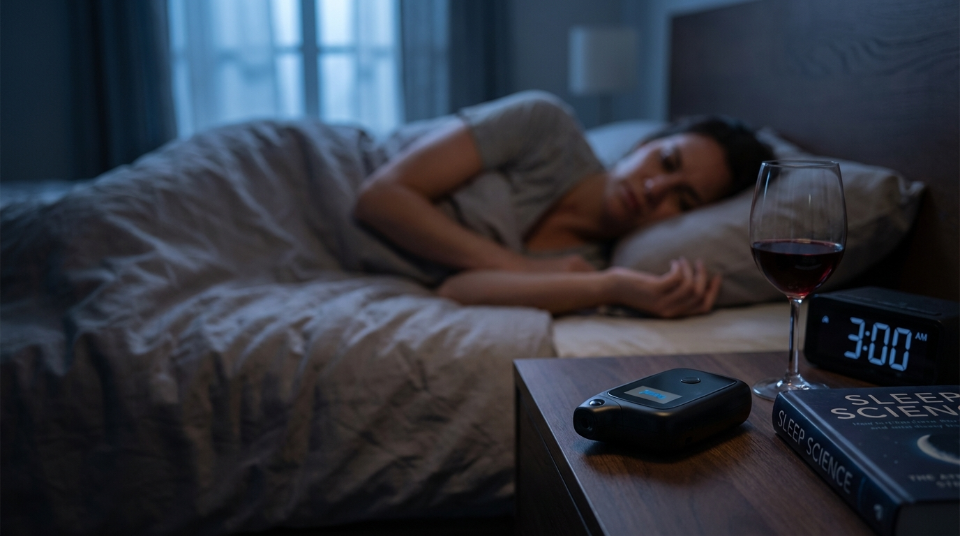
As alcohol is metabolized (typically at 0.015% BAC per hour), its sedative effects wear off. This creates a rebound effect where your brain becomes more active—often around 3-4 AM for evening drinkers. As a result, you wake up more frequently, spend more time in light sleep, and may have trouble falling back asleep.
Many people don't remember these awakenings but still experience their effects: fatigue, poor concentration, and that characteristic "didn't sleep well" feeling.
Physical Effects That Disrupt Sleep
Beyond its effects on brain chemistry, alcohol causes several physical changes that interfere with restful sleep:
Increased Bathroom Trips
Alcohol is a diuretic—it increases urine production. This means more trips to the bathroom during the night, each one disrupting your sleep cycle. Moreover, alcohol suppresses vasopressin, a hormone that normally helps your body retain water during sleep.
Worsened Snoring and Sleep Apnea
Alcohol relaxes the muscles in your throat, which can worsen snoring and sleep apnea. For people with existing sleep apnea, alcohol can significantly increase the number and duration of breathing pauses during sleep. Even people who don't normally snore may do so after drinking.
Night Sweats and Temperature Dysregulation
Alcohol dilates blood vessels, which can make you feel warm and cause night sweats. This interferes with your body's normal temperature regulation during sleep. Since body temperature naturally drops during sleep, alcohol's warming effect works against this process and reduces sleep quality.
Digestive Disruption
Alcohol increases stomach acid production and can trigger acid reflux, especially when lying down. The resulting discomfort often wakes people up or prevents them from reaching deeper sleep stages.
How Much Alcohol Affects Sleep?
The relationship between alcohol and sleep disruption is dose-dependent. Here's what research shows:
|
Amount |
Typical Sleep Effects |
|
1 drink |
Minimal effects for most people if consumed several hours before bed. May slightly reduce REM sleep. |
|
2-3 drinks |
Noticeable sleep disruption. Reduced REM sleep, increased second-half awakenings, lighter overall sleep quality. |
|
4+ drinks |
Significant disruption. Heavily suppressed REM, fragmented sleep, likely early morning awakening, poor overall quality. |
Timing matters too. Alcohol consumed closer to bedtime has more severe effects. Drinking earlier in the evening allows more time for metabolism before sleep, reducing (but not eliminating) disruption.
Long-Term Effects of Regular Drinking on Sleep
Occasional drinking disrupts individual nights of sleep. However, regular drinking creates more serious, lasting problems:
- Chronic sleep debt: Accumulated poor-quality sleep creates a persistent deficit that can't be recovered with a single good night's rest
- Tolerance to sedative effects: Over time, you need more alcohol to achieve the same drowsiness, while the sleep disruption continues or worsens
- Dependence for sleep: Regular use can create psychological or physical dependence, making it difficult to fall asleep without alcohol
- Rebound insomnia: When regular drinkers stop or reduce consumption, they often experience severe insomnia that can last days or weeks
These effects create a vicious cycle: poor sleep leads to fatigue, which leads to using alcohol to relax, which leads to worse sleep, and so on.
How to Minimize Alcohol's Impact on Sleep
If you choose to drink, these strategies can help reduce sleep disruption:
- Stop drinking early. Allow at least 3-4 hours between your last drink and bedtime. This gives your body time to metabolize most of the alcohol before you sleep.
- Drink water alongside alcohol. Staying hydrated reduces the diuretic effect and may lessen night sweats and middle-of-the-night thirst.
- Eat before and while drinking. Food slows alcohol absorption, resulting in lower peak BAC and more gradual metabolism. This means less dramatic rebound effects during the night.
- Limit your quantity. One drink has far less impact than four. Know your limits and stay well within them, especially on nights when good sleep matters.
- Avoid late-night drinking entirely. That nightcap isn't helping—it's actively harming your sleep. If you want to drink, do it earlier in the evening.
- Track how alcohol affects your sleep. Pay attention to how you feel the morning after drinking versus after alcohol-free nights. Many people don't realize how much alcohol affects them until they compare.
Understanding Your Personal Pattern
Everyone metabolizes alcohol differently. A drink that barely affects one person's sleep might significantly disrupt another's. Therefore, understanding your personal response helps you make better decisions.
Consider tracking:
- How many drinks you have and at what times
- Your BAC before bed (if you have a breathalyzer)
- How you slept—awakenings, dreams, restlessness
- How you feel the next morning—energy, focus, mood
After a few weeks of tracking, patterns emerge. You might discover that two drinks are fine but three ruin your sleep, or that drinking before 7 PM is okay but after 9 PM isn't. This personalized information is far more useful than general guidelines.
The Bottom Line
Alcohol may help you fall asleep, but it significantly harms sleep quality. It suppresses REM sleep, fragments your sleep cycles, increases nighttime awakenings, and leaves you feeling unrested despite adequate time in bed.
The nightcap myth persists because the initial sedation feels helpful. However, the cumulative damage to sleep quality—and the resulting fatigue, poor concentration, and health effects—far outweighs any benefit from faster sleep onset.
If you choose to drink, do so earlier in the evening, stay hydrated, and limit your quantity. Tracking your drinking and its effects helps you understand your personal tolerance and make informed decisions about when alcohol is worth the sleep cost.
|
Track Your Drinking, Improve Your Sleep The tuul® Breeze is a professional-grade portable breathalyzer that helps you understand your actual alcohol consumption. By knowing your BAC before bed, you can make informed decisions about whether another drink is worth tomorrow's fatigue. |
Frequently Asked Questions
Why do I wake up at 3 AM after drinking?
This is typically when your body has metabolized most of the alcohol. As the sedative effect wears off, your brain experiences a rebound arousal effect. Additionally, blood sugar drops, stress hormones rise, and your body temperature is dysregulated—all of which promote waking. This is one of the most common alcohol-related sleep complaints.
Does alcohol help with insomnia?
No. While alcohol may help you fall asleep faster, it worsens overall sleep quality and can actually cause insomnia over time. Regular use creates dependence, and stopping can trigger severe rebound insomnia. If you struggle with sleep, alcohol is making it worse, not better. Consequently, speak with a doctor about proper insomnia treatment.
How long before bed should I stop drinking?
Allow at least 3-4 hours between your last drink and bedtime. This gives your body time to metabolize most of the alcohol. For heavier drinking, you may need even more time. The goal is to have minimal alcohol in your system when you actually try to sleep.
Why do I have vivid or disturbing dreams after drinking?
Alcohol suppresses REM sleep initially. As it's metabolized, your brain experiences "REM rebound"—a surge of REM sleep to compensate. This concentrated REM is often associated with intense, vivid, or disturbing dreams. The dreams themselves aren't more meaningful; they're just a side effect of disrupted sleep architecture.
Is it better to drink earlier in the day if I want to sleep well?
Yes, generally speaking. Drinking earlier gives your body more time to metabolize alcohol before sleep. A drink with lunch has far less impact on that night's sleep than a drink after dinner. However, the best approach for sleep quality is simply drinking less or not at all.